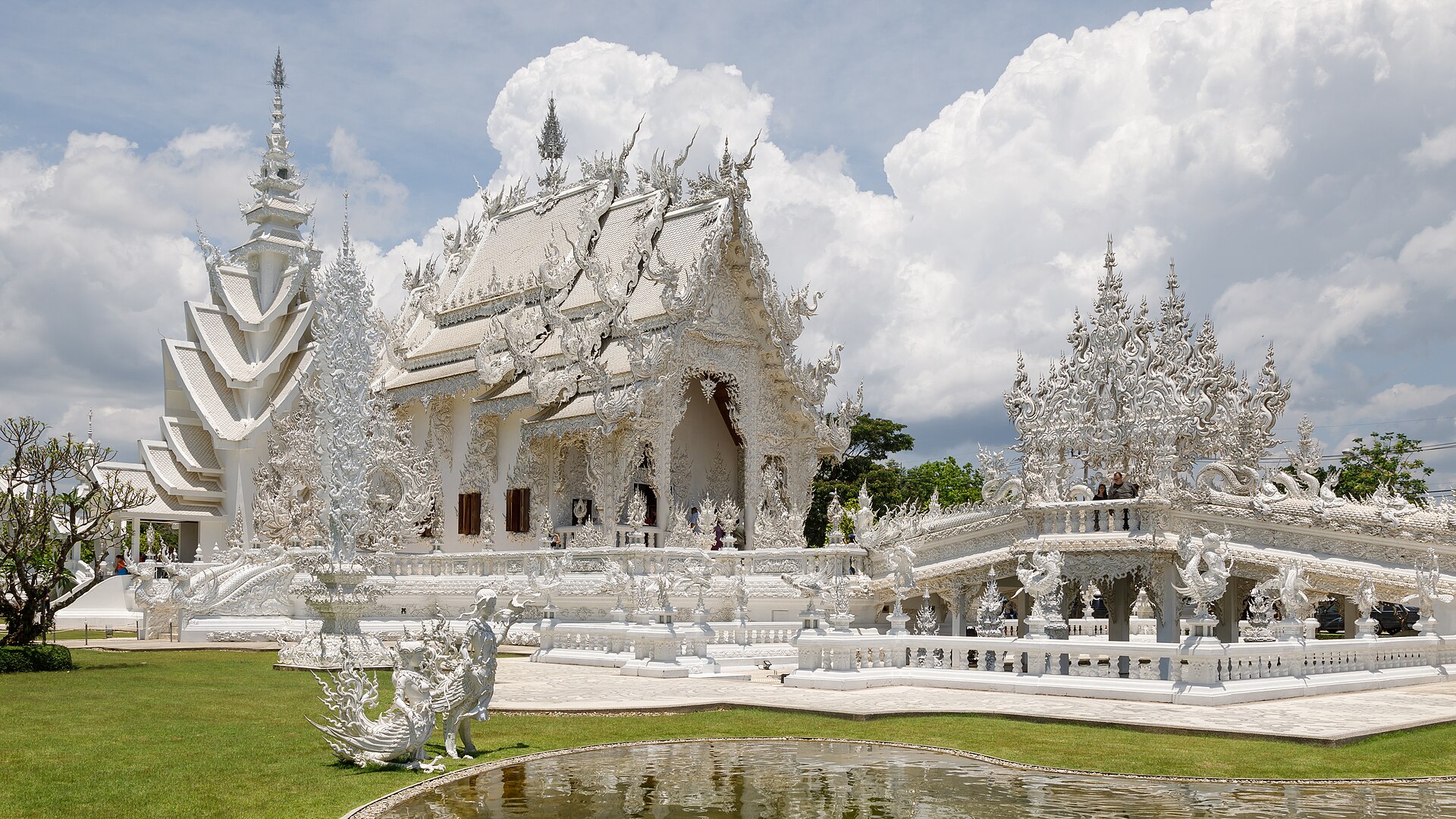
Wat Rong Khun, globally known as the White Temple, is one of the most photographed contemporary Buddhist temples in Thailand. Located in Pa O Don Chai, just outside Chiang Rai city, it is a privately-funded art temple created by national artist Chalermchai Kositpipat. Its dazzling white plaster walls, inlaid with thousands of mirrored glass fragments, and its unconventional mix of traditional Buddhist symbolism with pop-culture imagery have made it one of Chiang Rai's top attractions and a bucket-list stop for visitors to Northern Thailand.
Wat Rong Khun stands on the site of a much older village temple that had fallen into disrepair by the mid-1990s. In 1997, Chalermchai Kositpipat, a nationally celebrated visual artist born in Chiang Rai's Rong Khun community, took on the restoration entirely at his own expense, eventually investing more than 40 million baht of his own money. He deliberately refused donations from government bodies or large donors so that his creative and spiritual vision would remain uncompromised. The design draws inspiration from nation, religion, and monarchy, and Chalermchai intended the temple as an offering to the Lord Buddha. Construction is still ongoing today; the full nine-building complex, which will eventually include a relics hall, meditation hall, art gallery, and monks' quarters, is not expected to be finished until around 2070.
The centerpiece of the complex is the pure-white ubosot, its concrete frame coated in whitewash and studded with mirrored glass chips that catch the sunlight. The white color represents the purity of the Buddha, while the mirrored fragments symbolize his wisdom shining across the world. The three-tiered roof and abundant naga (serpent) motifs echo classic Lanna and Thai temple architecture.
Visitors approach the ubosot by crossing a small bridge over an ornamental lake. Beneath the bridge, hundreds of outstretched hands rise up from the ground, representing unrestrained desire and suffering. According to local belief, visitors should walk forward across the bridge without looking back, symbolizing leaving worldly temptation behind on the path toward enlightenment.
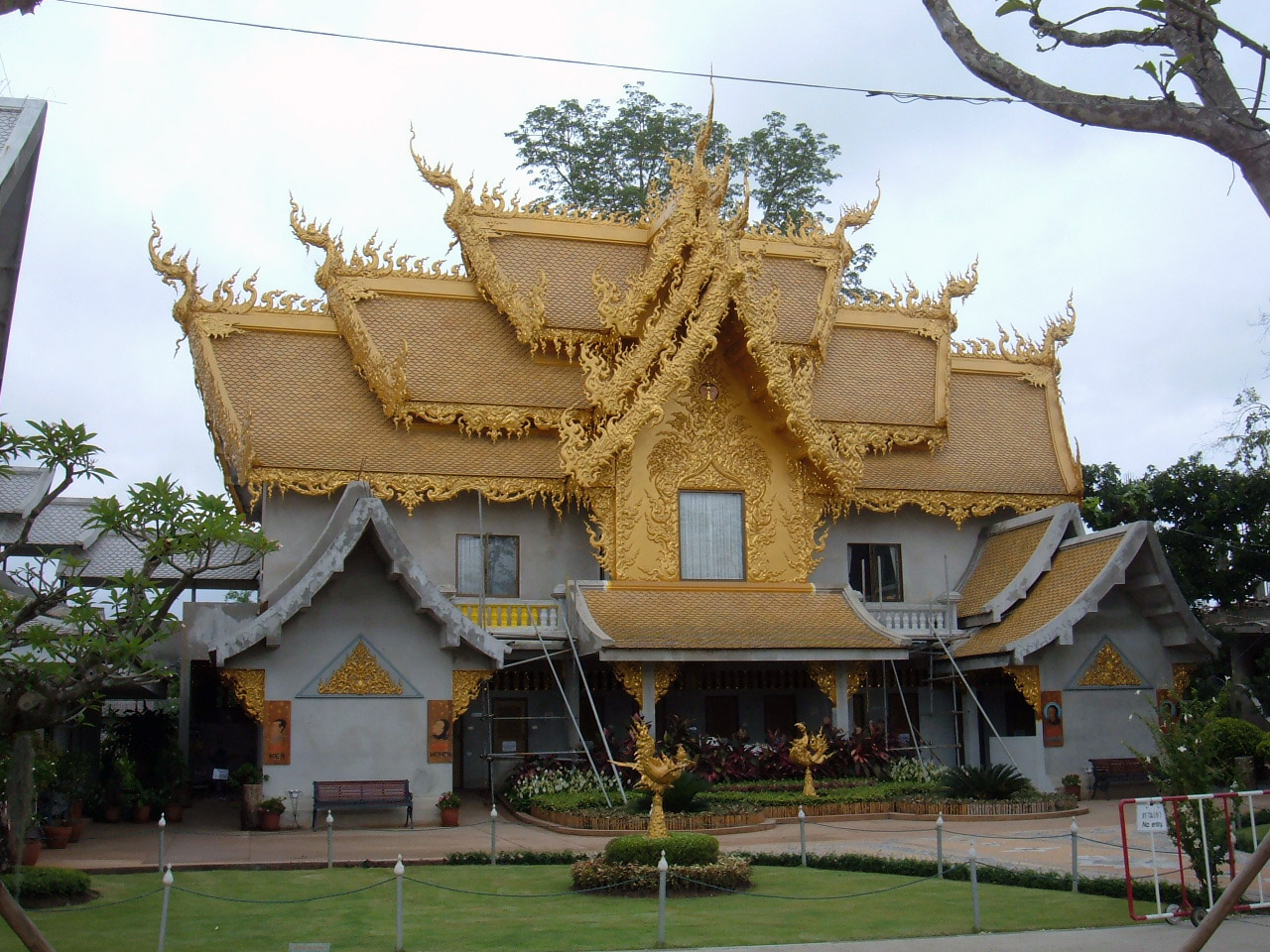
A strikingly gilded building near the ubosot houses the temple's restrooms. It is intentionally as ornate as the ubosot itself: the gold represents the body and worldly, material concerns, in deliberate contrast to the white ubosot, which represents the mind and the pursuit of merit.
Inside the ordination hall, traditional Buddhist murals give way to surreal, contemporary imagery, including depictions of superheroes, science-fiction characters, and symbols of modern destruction such as nuclear weapons and the September 11 attacks. The murals are Chalermchai's commentary on the ongoing struggle between good and evil in the modern world. Photography is not permitted inside the ubosot.
A gallery near the entrance displays paintings and sculptures by Chalermchai Kositpipat and his students, offering insight into the artistic philosophy behind the temple. Entry to the gallery is free.
Opening hours: Open daily from 08:00 to 17:00 (last entry at 16:40).
Admission fee: Free for Thai nationals. Foreign visitors pay 200 baht. Children under 120 cm tall and foreign visitors aged 70 and above enter free.
Recommended visit duration: About 1-2 hours.
Dress code: Modest clothing that covers the shoulders and knees is required, as this is an active religious site.
Photography: Photography is allowed on the grounds and bridge, but strictly prohibited inside the main ubosot.
Phone: +66 5367 3579.
Wat Rong Khun is located in Pa O Don Chai, about 13 kilometers south of downtown Chiang Rai, roughly a 15-20 minute drive. A metered taxi or Grab from the city center costs approximately 150-300 baht one way. Budget travelers can take a blue or green songthaew (shared pickup truck) heading toward Phan or Mae Khachan from Chiang Rai's Bus Terminal 1 for about 20 baht. Many visitors combine a trip here with nearby Wat Rong Suea Ten (the Blue Temple) and the Baan Dam Museum, which sit along the same route.
Arrive right at opening (08:00) or after 16:00 to avoid the peak crowds between 10:00 and 14:00, and to enjoy softer light for photos.
Dress modestly (shoulders and knees covered) since this remains an active religious site.
Bring a hat or umbrella, as most of the grounds are open and shade is limited.
Do not look back while crossing the bridge into the ubosot, according to local belief, and remember that photography is banned inside the ordination hall.
Pair your visit with Wat Rong Suea Ten (Blue Temple) and Baan Dam Museum for a full day of Chiang Rai's most iconic contemporary temple art.
60 Moo 1, Pa O Don Chai, Mueang Chiang Rai District, Chiang Rai 57000, Thailand
Directions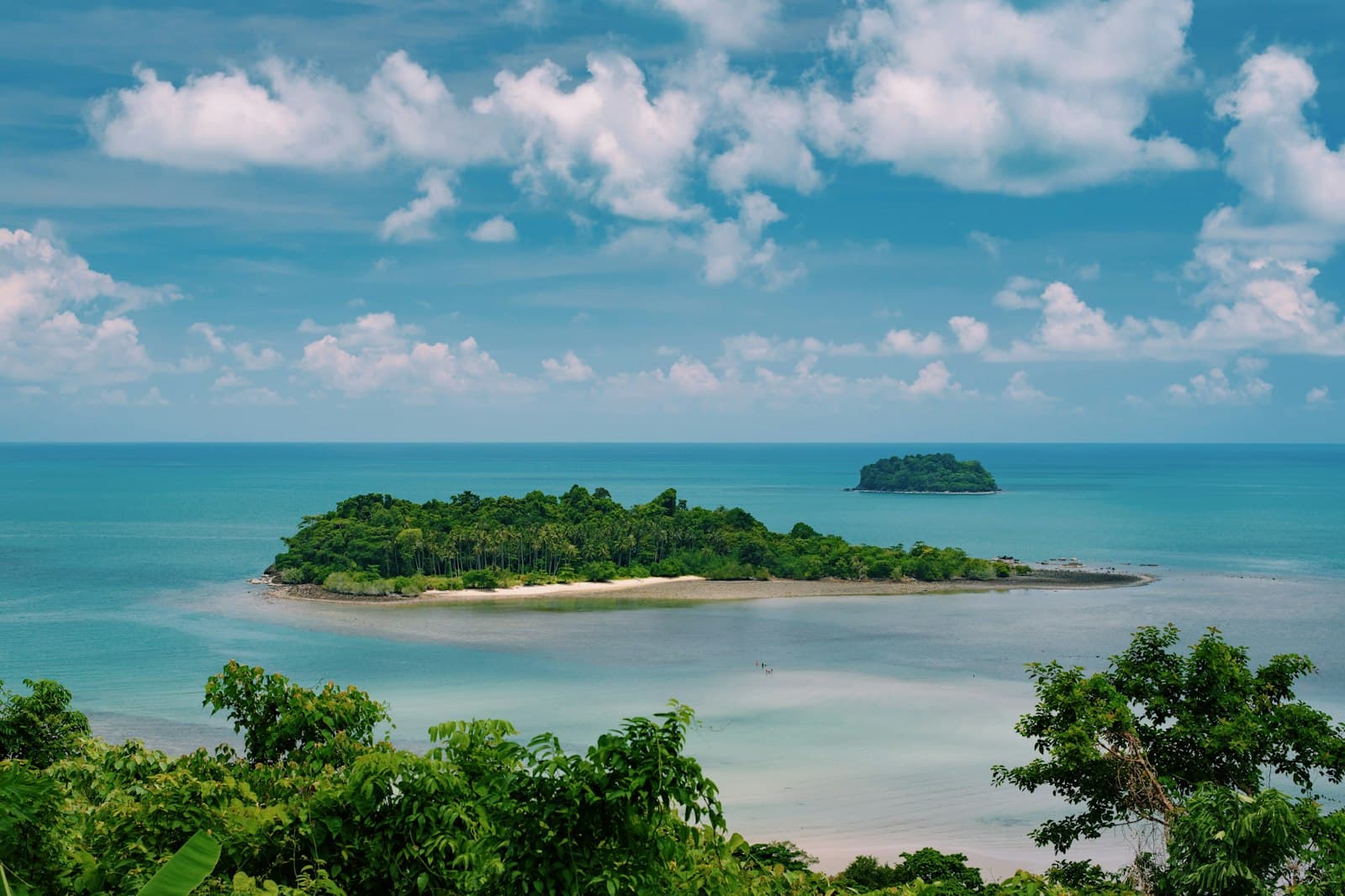
Tambon Ko Kut, Amphoe Ko Kut, Trat 23000, Thailand
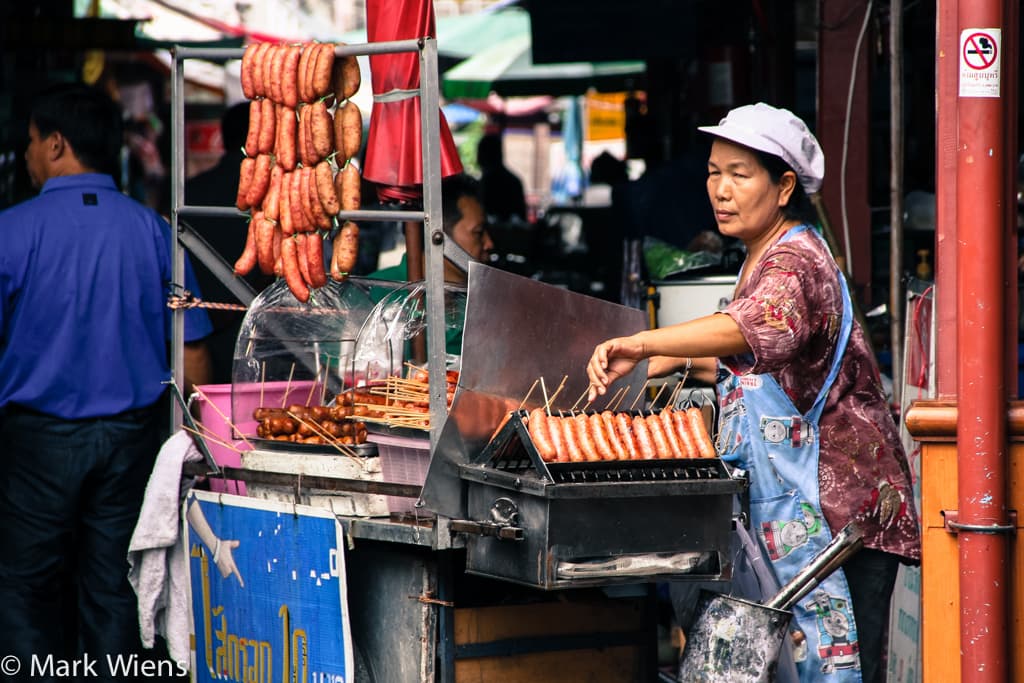
Nakhon Sawan Rd, Dusit, Bangkok 10300
24 Prachatipok Road, Wat Kanlaya Subdistrict, Thon Buri District, Bangkok 10600, Thailand