Customs & Etiquette
Best time
Any occasion
Where to witness
Temples, markets, hotels
Difficulty
Easy to learn
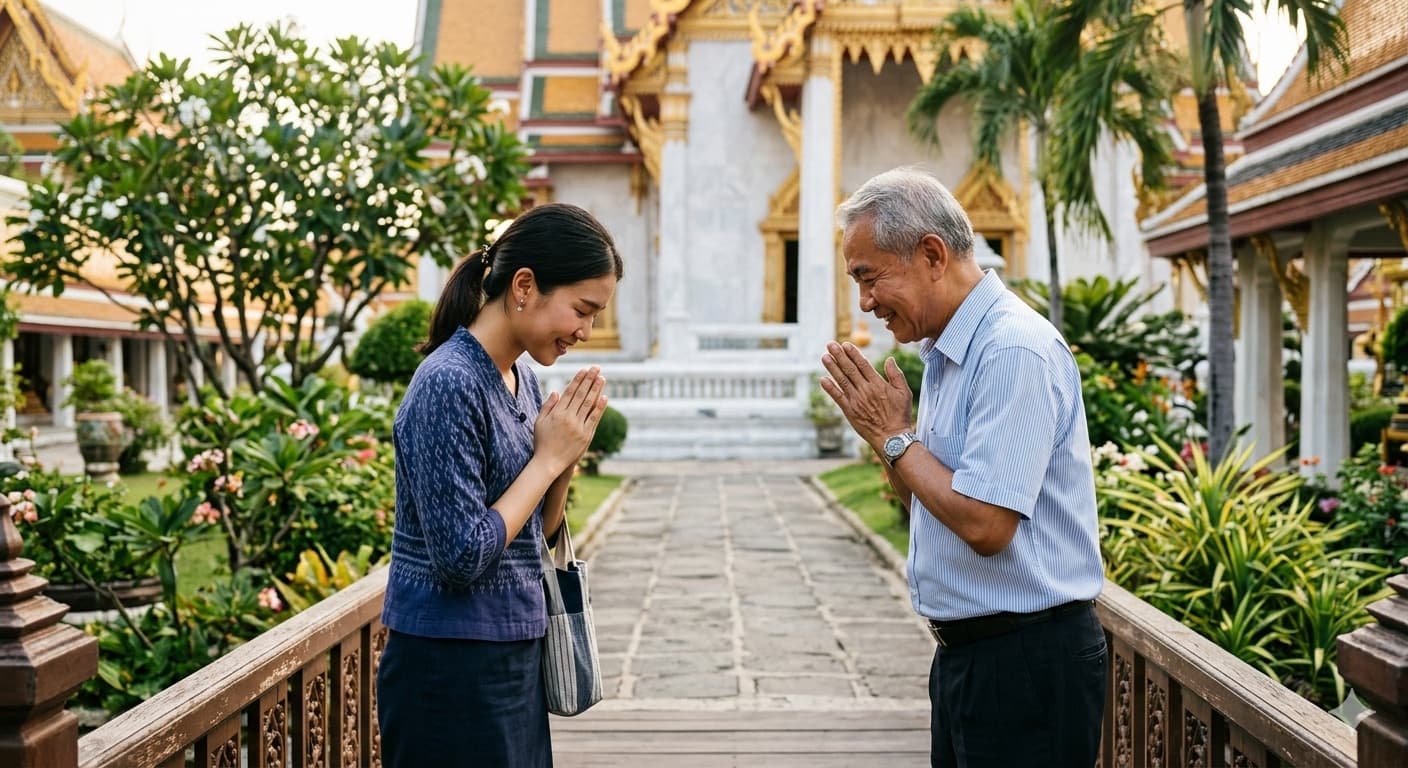
The wai (ไหว้) is more than a greeting — it is a living expression of Thai values. Press your palms together, bow your head, and you communicate respect, gratitude, and warmth all at once. Master this single gesture and every door in Thailand opens a little wider.

The height of your hands signals the relationship. The deeper the bow, the greater the reverence. Monks receive hands raised to the forehead; elders at nose level; peers at the chest. Children bow to adults — not the other way around. You'll pick it up within a day just by watching.

Greet your hotel staff, thank your tuk-tuk driver, apologise after bumping into someone at Chatuchak — the wai fits every situation. You'll see it open Muay Thai bouts, close business meetings, and accompany offerings at temple shrines. It never goes wrong.
How to Perform the Wai

Highest reverence
Thumbs to the forehead, deep bow. Reserved for monks, sacred images, and members of the royal family.

Deep respect
Hands at nose level, moderate bow. For parents, teachers, and respected senior figures you meet.

Warm greeting
Hands at chest, gentle bow. The everyday greeting for equals, new friends, and welcoming strangers.