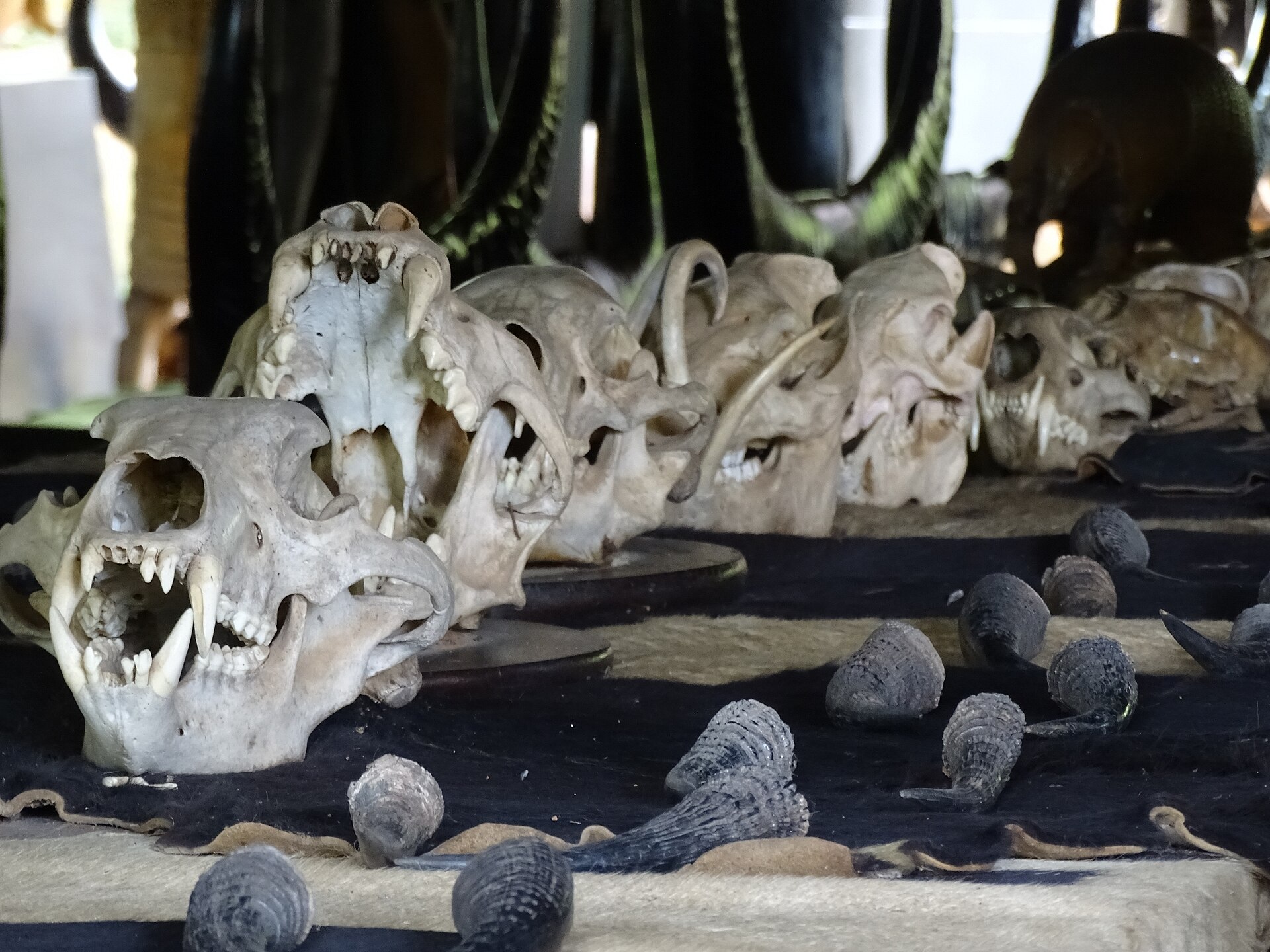
If the White Temple is Chiang Rai's vision of heaven, Baan Dam is the other side of the conversation. Spread across a shaded garden north of the city, the Black House is a collection of around 40 dark timber buildings, filled with buffalo horns, animal skins, bones and carved wood. It is not a temple, though it borrows the shapes of one. It is the life's work of Thawan Duchanee, one of Thailand's most celebrated artists, and it is unlike anywhere else in the country.
Some visitors find it unsettling. Most find it fascinating. Either way, it is the stop people talk about on the drive back.
Officially the Baan Dam Museum, the site covers roughly 160,000 square metres in Nang Lae subdistrict. Each building has its own name and purpose, from small wooden pavilions to a towering main hall with a four-tiered Lanna roof. Paths wind between them through palms and lawns, so a visit feels more like wandering through a village than walking around a museum.
Inside, you will find long snake skins laid across tables, chairs built from buffalo horns, crocodile skeletons and walls of heavy carving. It is dark, deliberate and theatrical, and that is the point.
Thawan Duchanee was born in Chiang Rai in 1939. He studied art in Bangkok and later in Amsterdam, and became known for powerful, often dark paintings that explored Buddhist ideas about desire, death and the human ego. In 2001 he was named a National Artist of Thailand.
He began building Baan Dam in 1976 and kept adding to it for the rest of his life. One of the earliest structures, the triangular Tri Phum building, was flattened by storms three times before it was finally completed. The large main hall, often called the Cathedral, came much later and took years to finish.
Thawan died in September 2014, aged 74. Baan Dam remains open to the public as a museum.
It is worth knowing that Thawan and Chalermchai Kositpipat, the artist behind the White Temple, were both born in Chiang Rai. Phuttha Kabkaew, who designed the Blue Temple, drew on both of them. Seeing all three places in one day shows you how the same northern Thai traditions were pulled in very different directions.
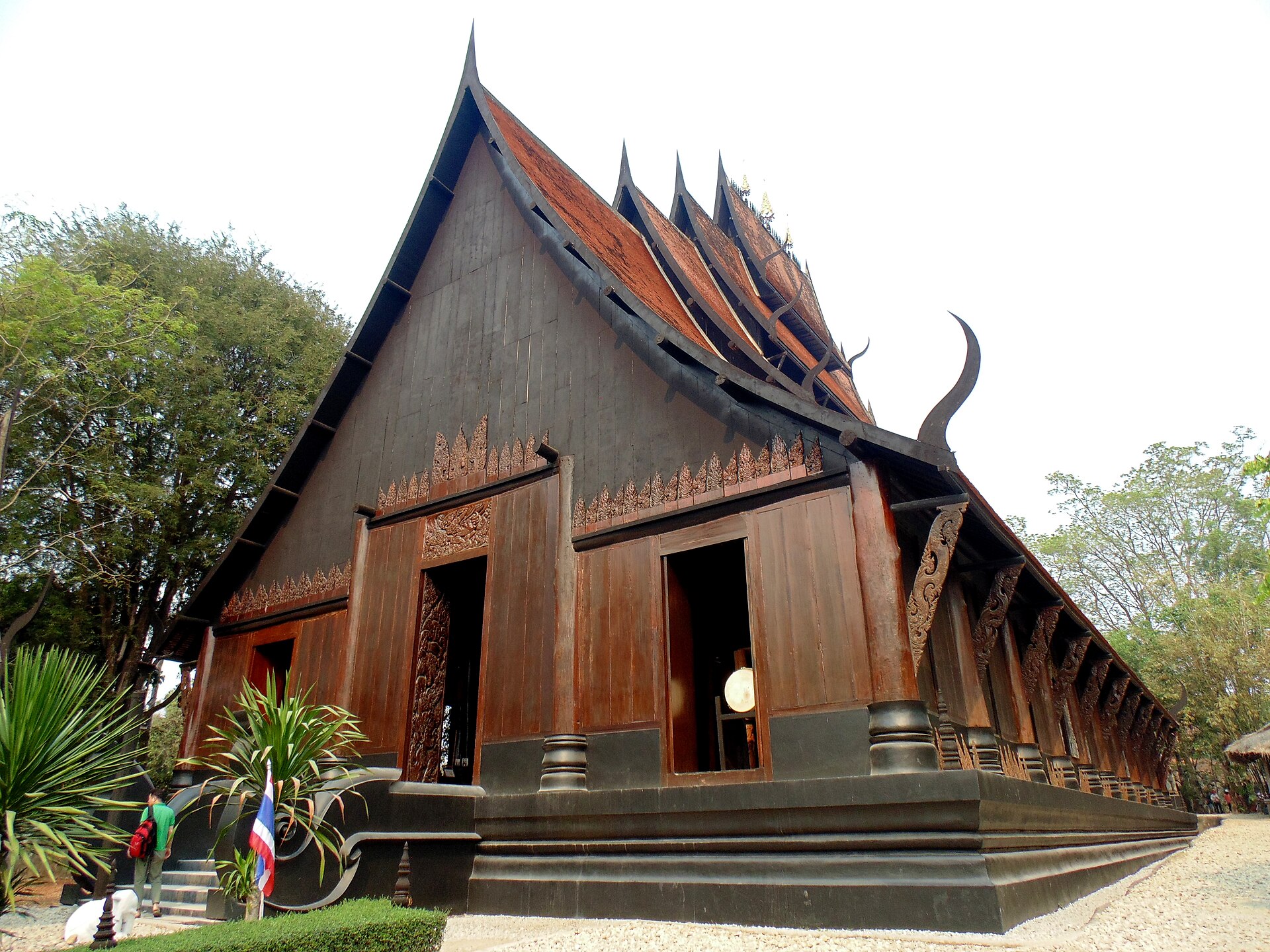
The largest building on the site, black timber under a steep multi-tiered roof. Inside is a long hall lined with carved pillars, horn-backed chairs and tables draped in snake skins. Light comes in sideways through the doors, which makes the whole space feel like a stage set.
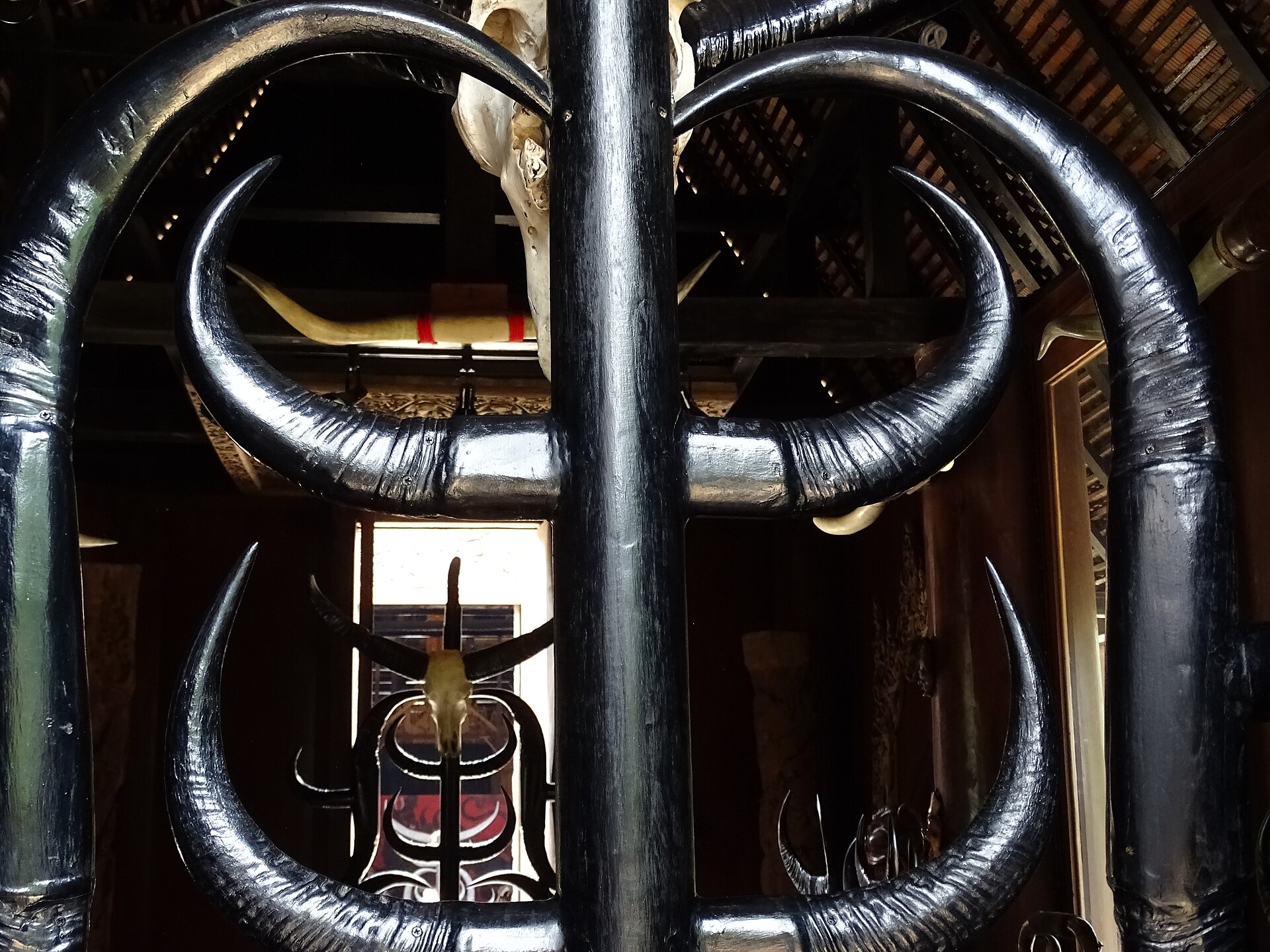
Several of the open buildings display skeletons, skulls, antlers and buffalo horns arranged on tables and beams. Thawan used these materials to make a point about impermanence and the body, a recurring theme in his paintings. If you are squeamish, this is the part to walk through quickly.
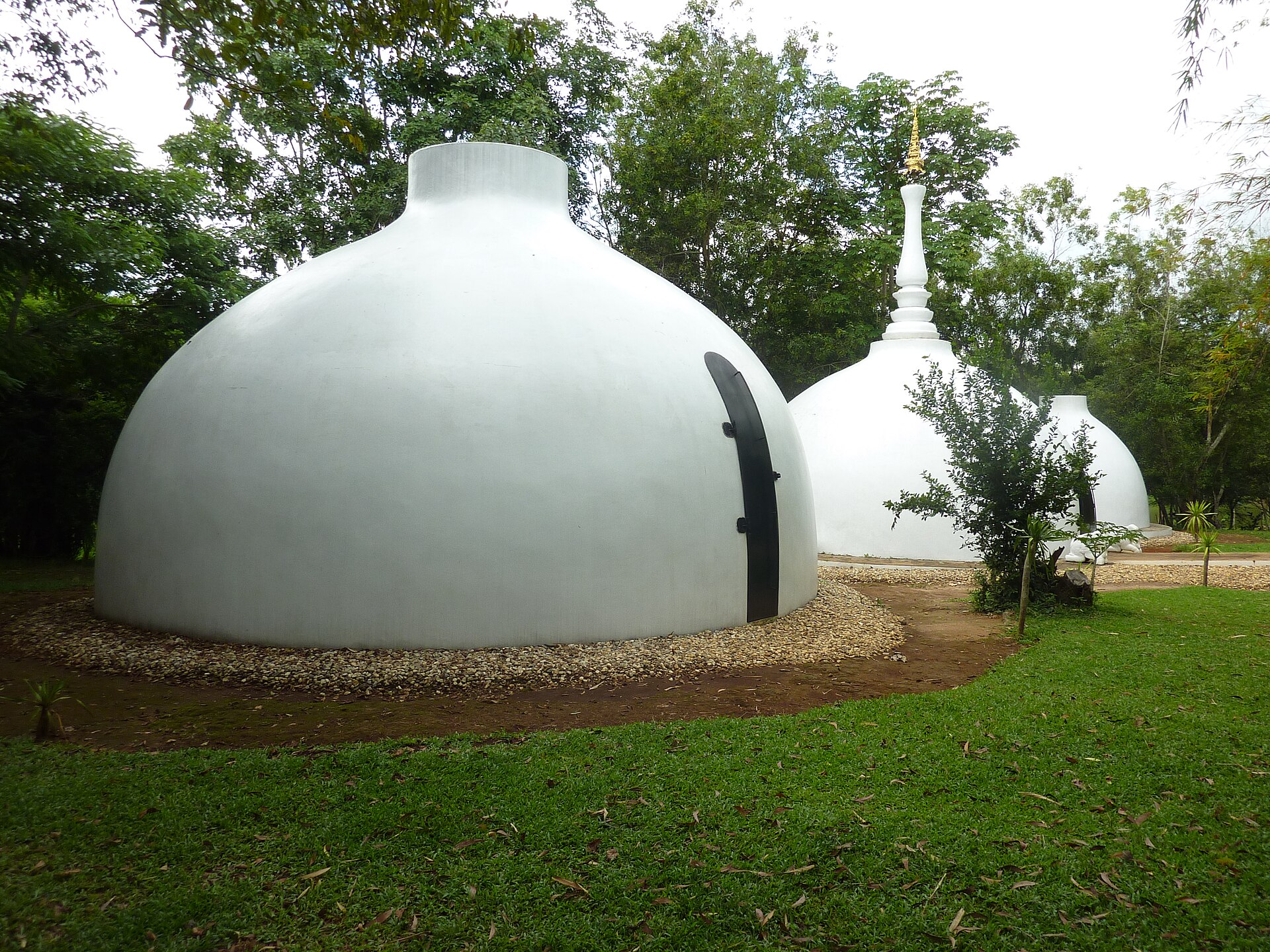
Among all the black wood, a group of white, rounded buildings stands out on the lawn. They are one of the most photographed corners of the site and a good reminder that Baan Dam is about contrast, not just darkness.
Look closely at the doors, walls and pillars. Many are covered in detailed northern Thai carving, from mythical figures to faces and animals. Some of the finest work is easy to miss because the buildings are so dim inside.
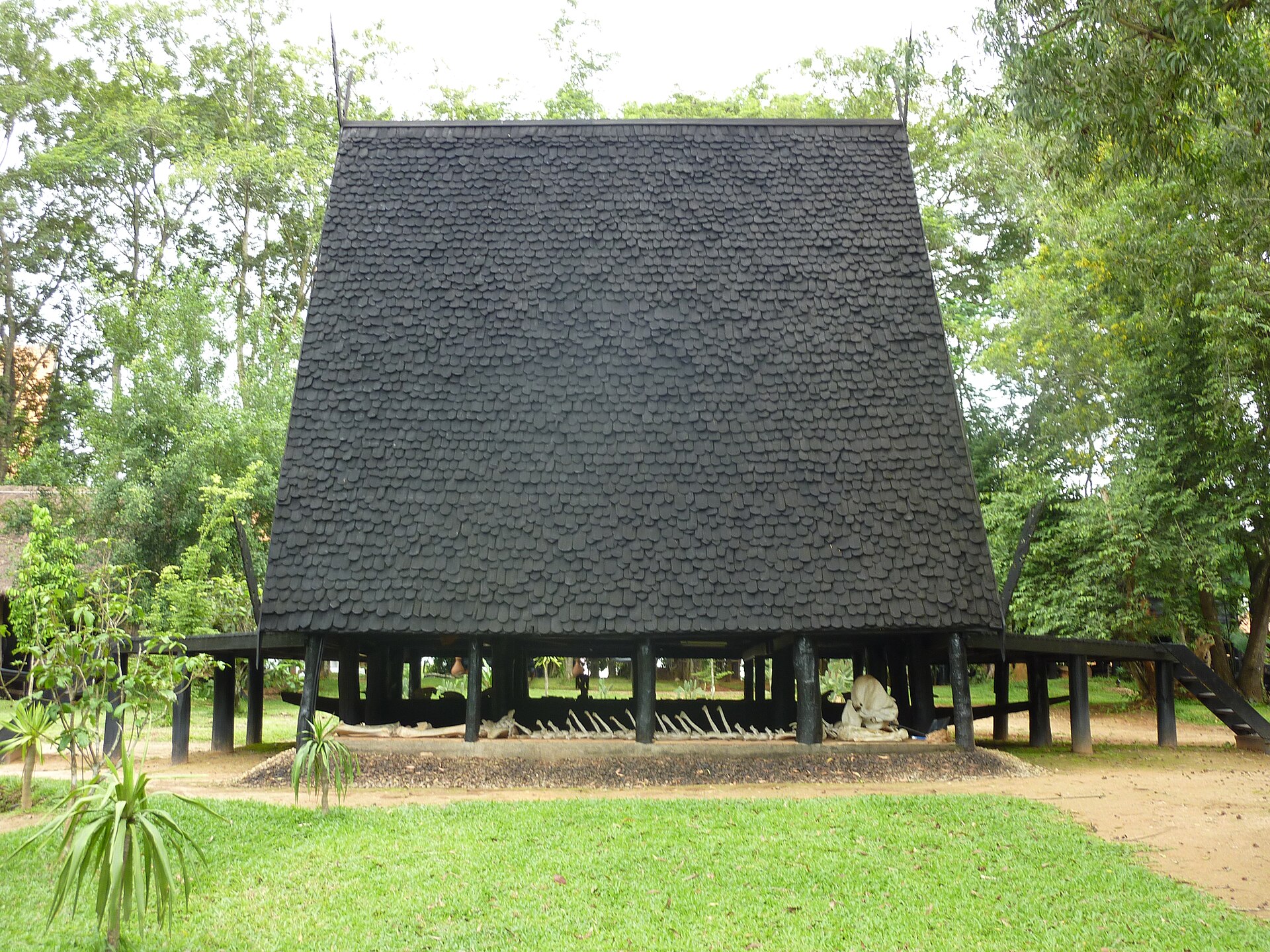
Walk to the far end of the grounds. The crowds thin out, and the smaller buildings on stilts and under low roofs are some of the most interesting on the site. Allow time; the garden is bigger than it looks from the entrance.
Opening hours: Daily, 9:00am to 5:00pm (some sources note the ticket counter closes from noon to 1pm)
Entrance fee: 80 baht per person
Address: 414 Moo 13, Nang Lae, Mueang Chiang Rai, Chiang Rai 57100
Phone: 053 776 333
Time needed: 1 to 1.5 hours
Photography: Allowed; avoid flash inside the buildings
Baan Dam is about 12 km north of central Chiang Rai, just off the main highway towards Mae Sai, roughly a 20-minute drive. Grab is the easiest option from town, but cars are less common out here, so book your return ride before you finish. Many visitors hire a driver or tuk-tuk for the day and combine Baan Dam with the two temples. A scooter also works well if you are comfortable on a busy highway.
For a full "temple triangle" day, start early at the White Temple south of the city, head north to Baan Dam, and stop at the Blue Temple on the way back into town in the late afternoon.
Bring cash. Small notes are the easiest way to pay the entrance fee.
Plan around lunch. Arrive in the morning or after 1pm to avoid waiting at the ticket counter.
Wear comfortable shoes. The site is large and you will walk more than you expect.
Be respectful. It is a museum, not a temple, but some buildings hold Buddhist images. Dress modestly and keep voices low.
Don't stop at the first building. The main hall is impressive, but the quieter pavilions further back are where the place gets interesting.
Planning the rest of your day? Read our Wat Rong Khun (White Temple) visitor guide and our Wat Rong Suea Ten (Blue Temple) visitor guide.
Photo credits: Szwendam się via Wikimedia Commons (CC BY-SA 4.0); Photo Dharma from Sadao, Thailand via Wikimedia Commons (CC BY 2.0); Adam Jones from Kelowna, BC, Canada via Wikimedia Commons (CC BY-SA 2.0).
A towering black timber hall with carved pillars, horn chairs and tables draped in snake skins.
Skeletons, skulls and buffalo horns arranged as art, a meditation on impermanence.
Rounded white buildings on the lawn, a striking contrast to the black wood around them.
Smaller buildings on stilts further back, quieter and full of detail.
414 Moo 13, Tambon Nang Lae, Mueang Chiang Rai District, Chiang Rai 57100, Thailand
Directions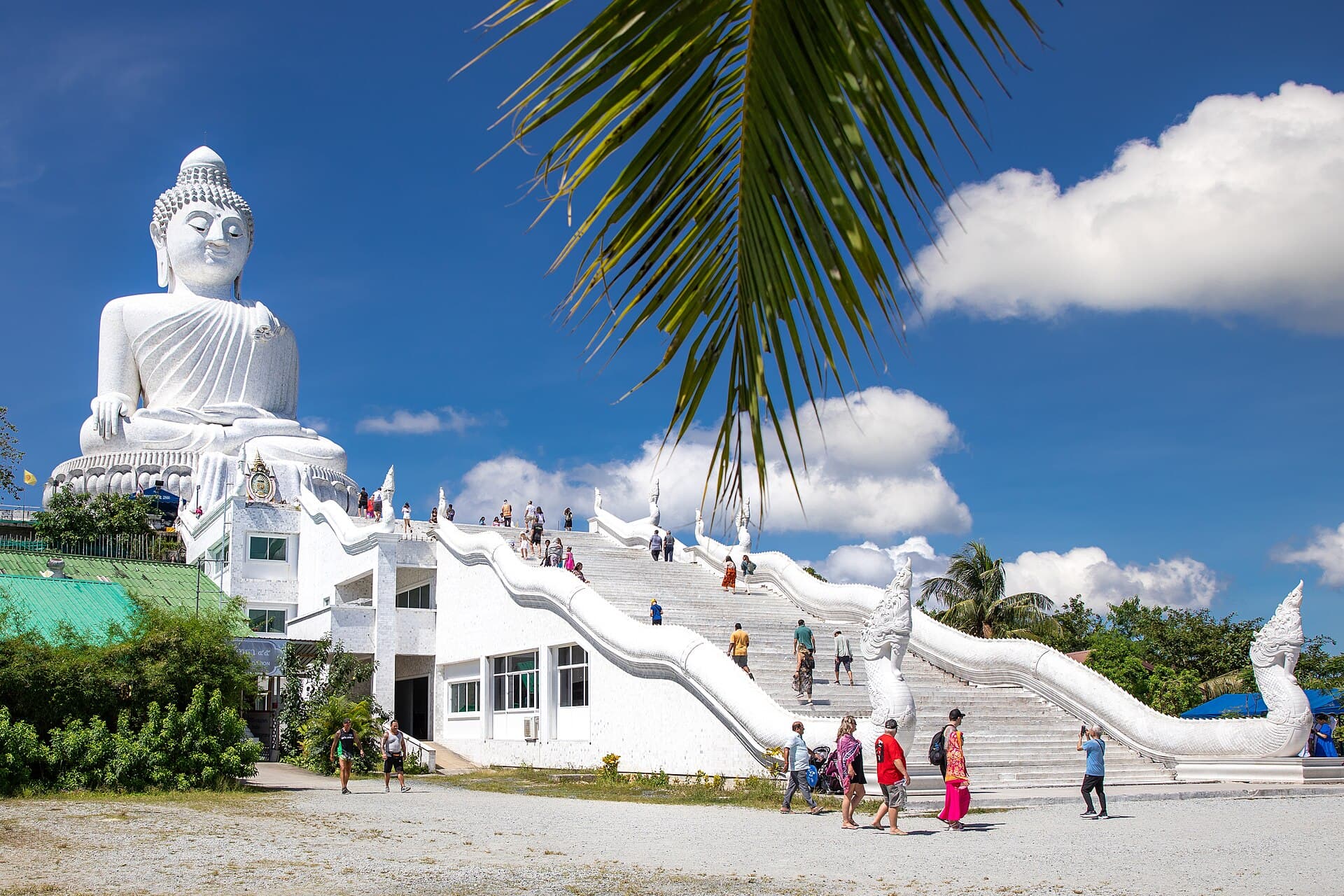
Nakkerd Hill, Soi Yot Sane 1, Mueang Phuket District, Phuket, Thailand
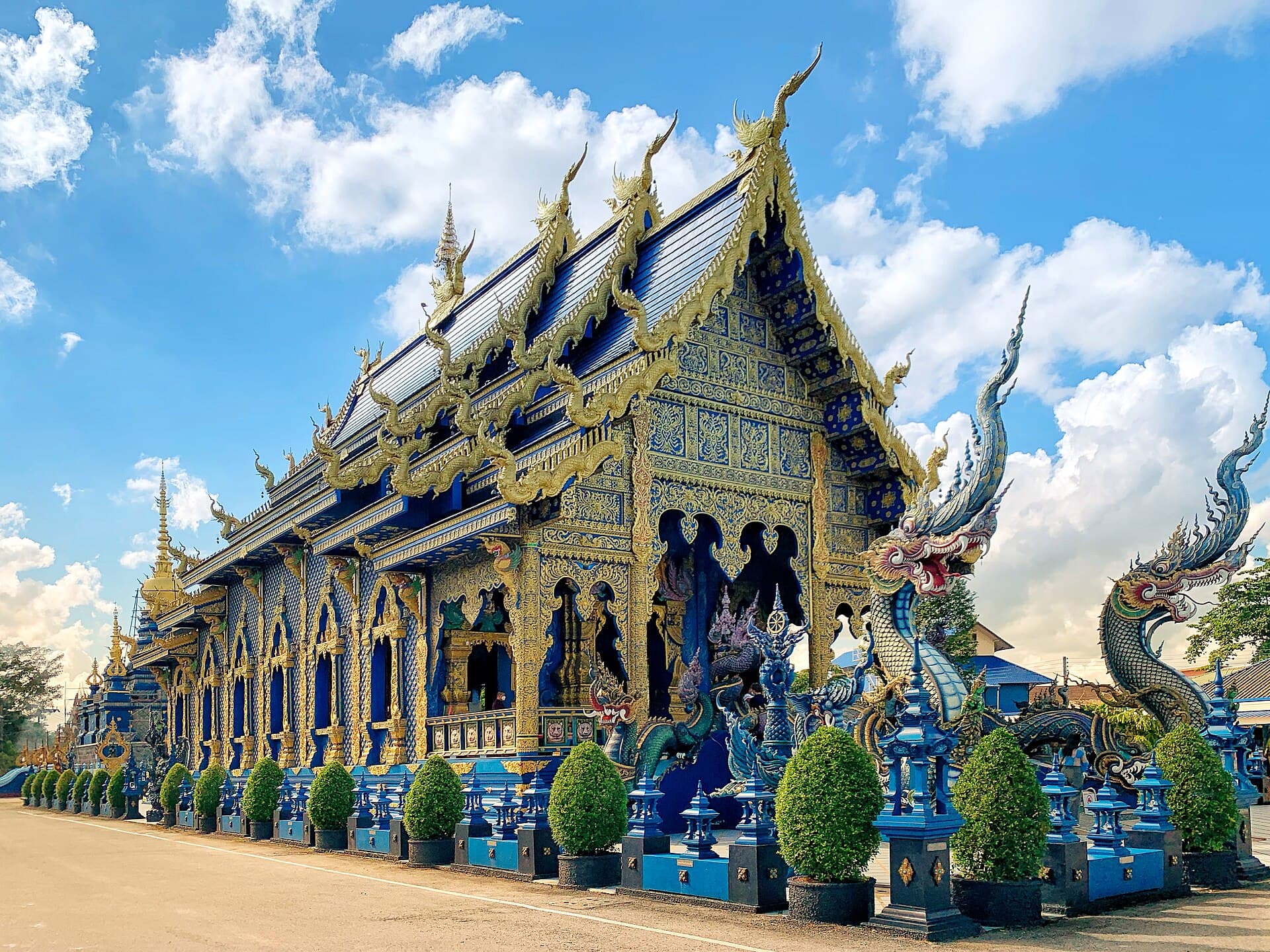
306 Moo 2, Maekok Road, Tambon Rim Kok, Mueang Chiang Rai District, Chiang Rai 57100, Thailand

60 Moo 1, Pa O Don Chai, Mueang Chiang Rai District, Chiang Rai 57000, Thailand