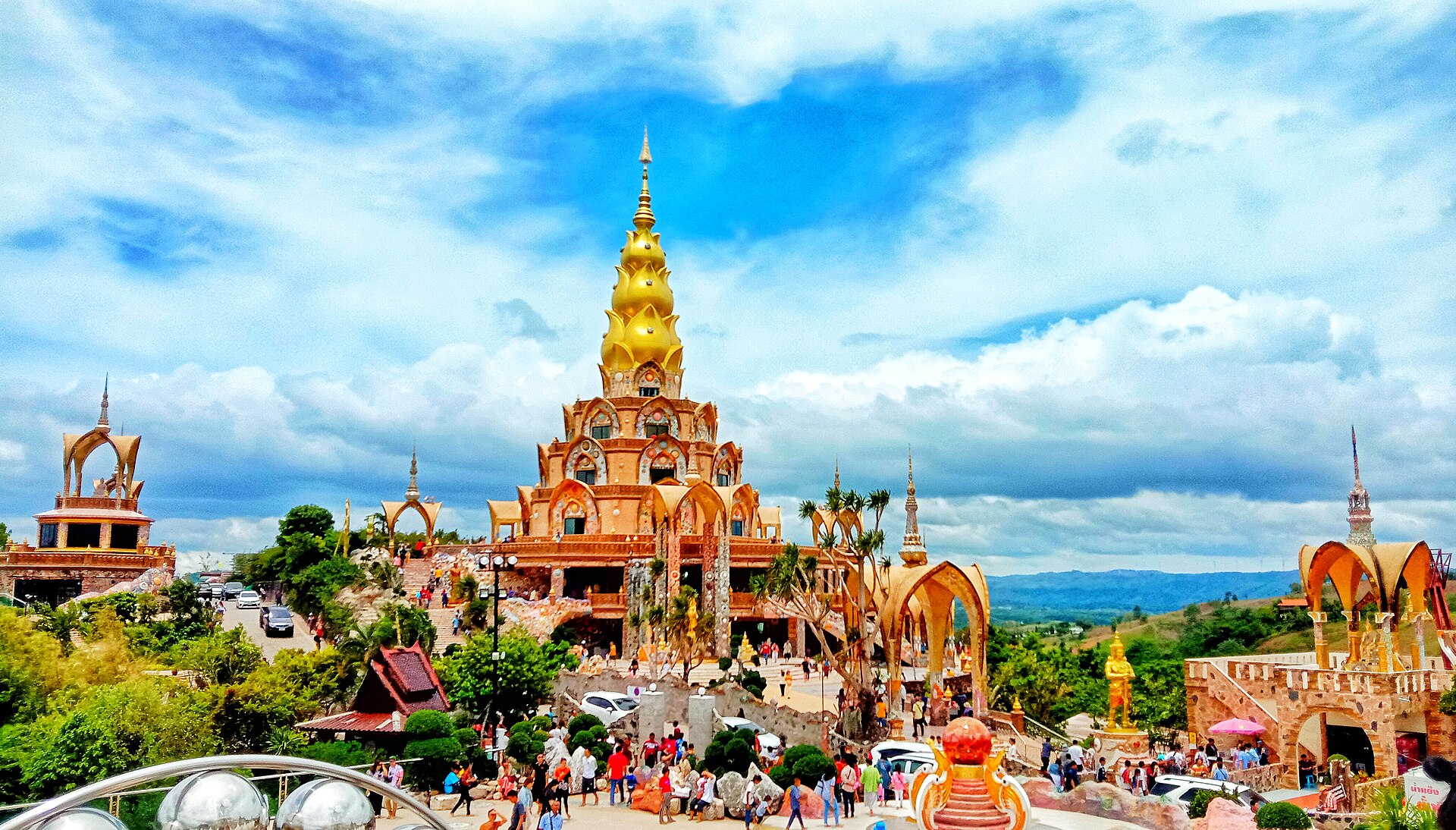
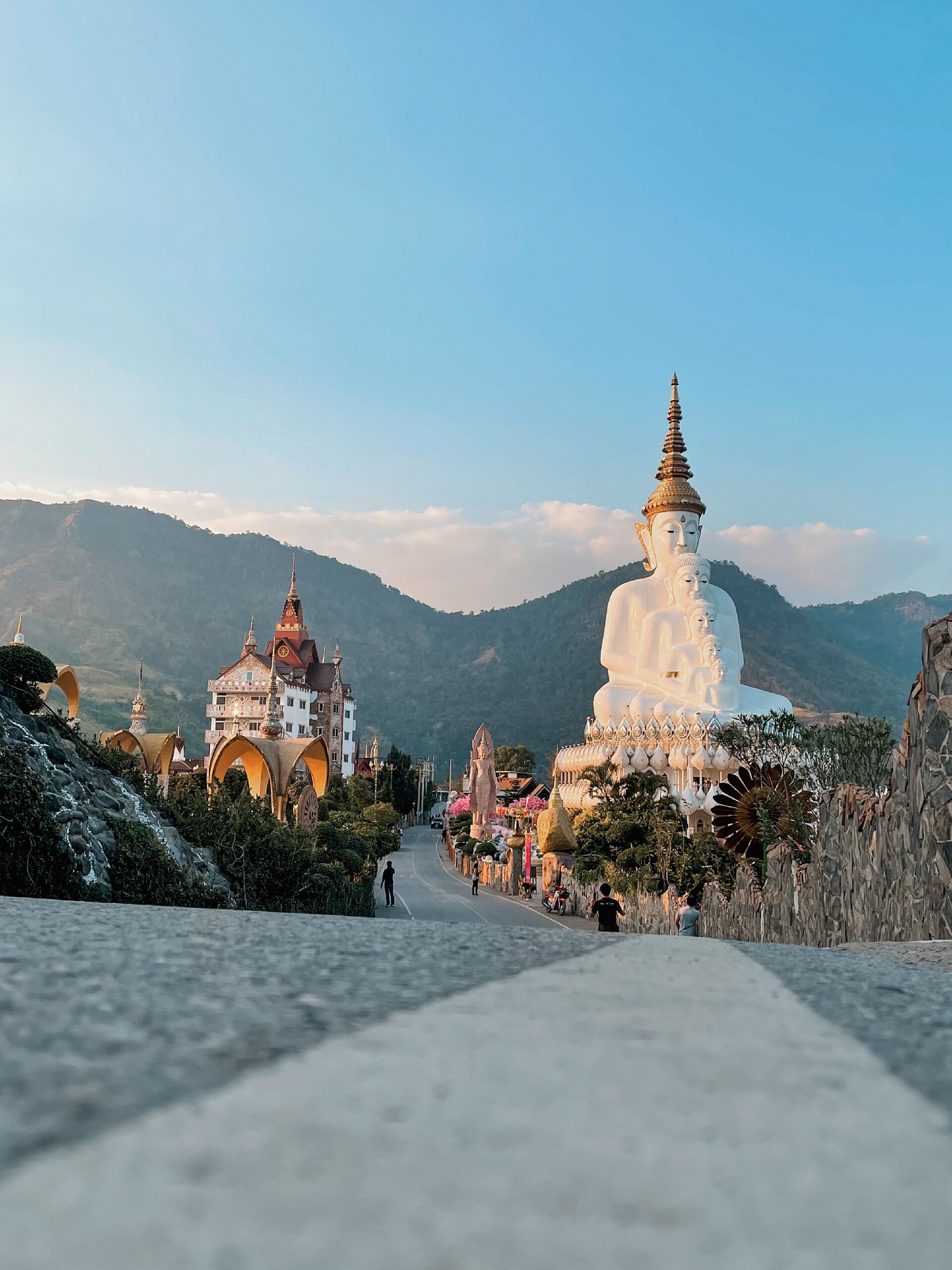
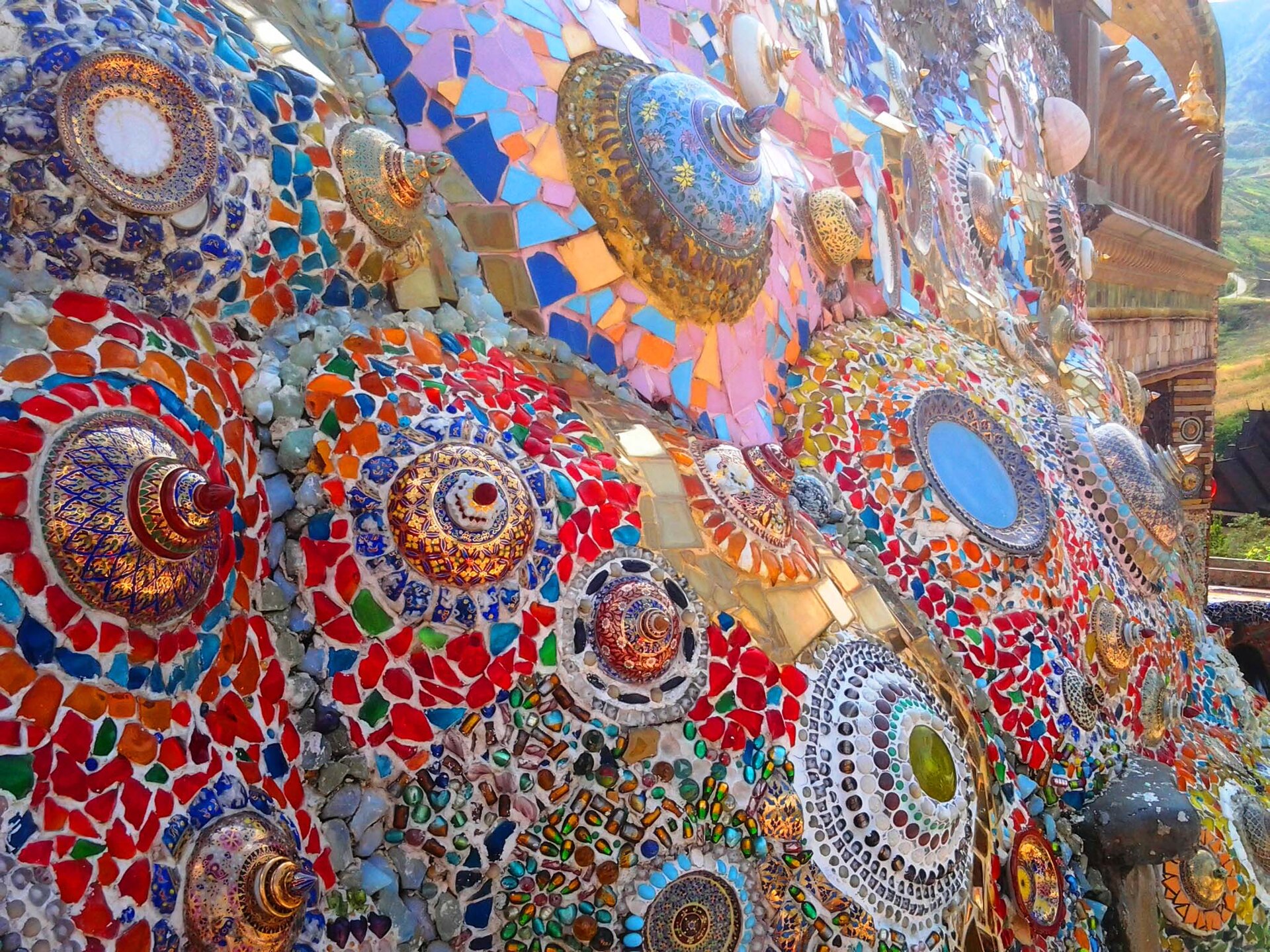
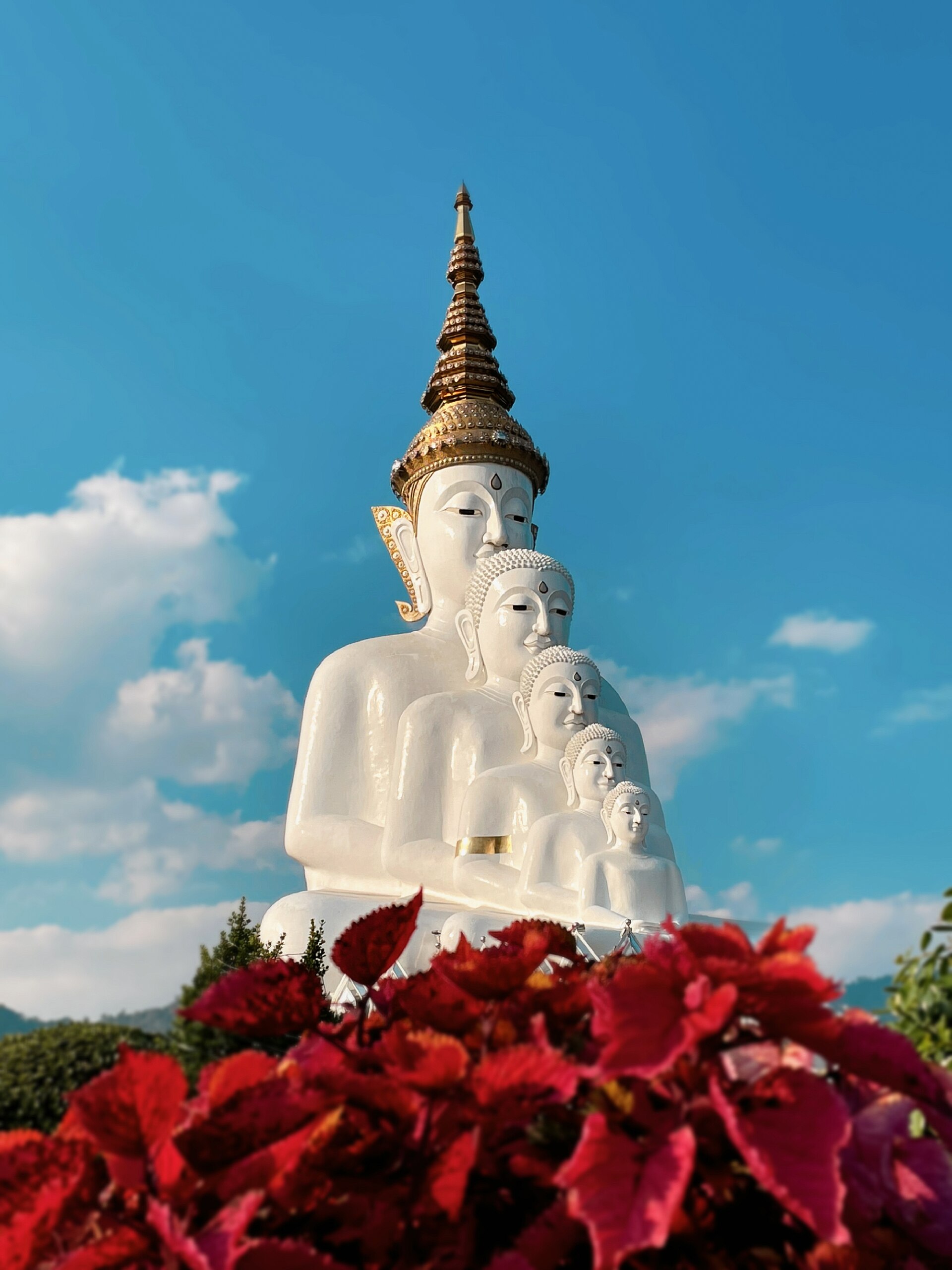
Some temples you visit for their history. Wat Phra That Pha Son Kaew you visit because nothing else in Thailand looks quite like it. Set on a ridge around 830 metres up in the hills of Khao Kho, it is covered almost entirely in ceramic mosaic: millions of pieces of broken pottery, porcelain and coloured stone pressed into its walls, stairways and chedi. Above it all sit five huge white Buddha images, stacked one behind the other and looking out over the mountains of Phetchabun.
Entry is free, the views are extraordinary on a clear morning, and it is one of the best reasons to make the trip into the hills of Khao Kho.
The name means roughly "the temple of the glass hidden in the cliff", and the setting lives up to it. The temple sits beside Highway 12 near Ban Thang Daeng in Khaem Son subdistrict, Khao Kho district, on a site that has grown from about 25 rai to more than 90 rai through donations.
It is still an active monastery and meditation centre, so you will see monks and lay practitioners alongside the visitors. Over the New Year period it is one of the busiest pilgrimage sites in the region, drawing tens of thousands of people.
Pha Son Kaew is a young temple by Thai standards. It began in 2004 as a Dhamma practice centre on land bought and donated by local supporters. In 2010 it was officially recognised as a temple under the name Wat Phra That Pha Kaew, and in 2013 it was renamed Wat Phra That Pha Son Kaew to match the name local people had always used.
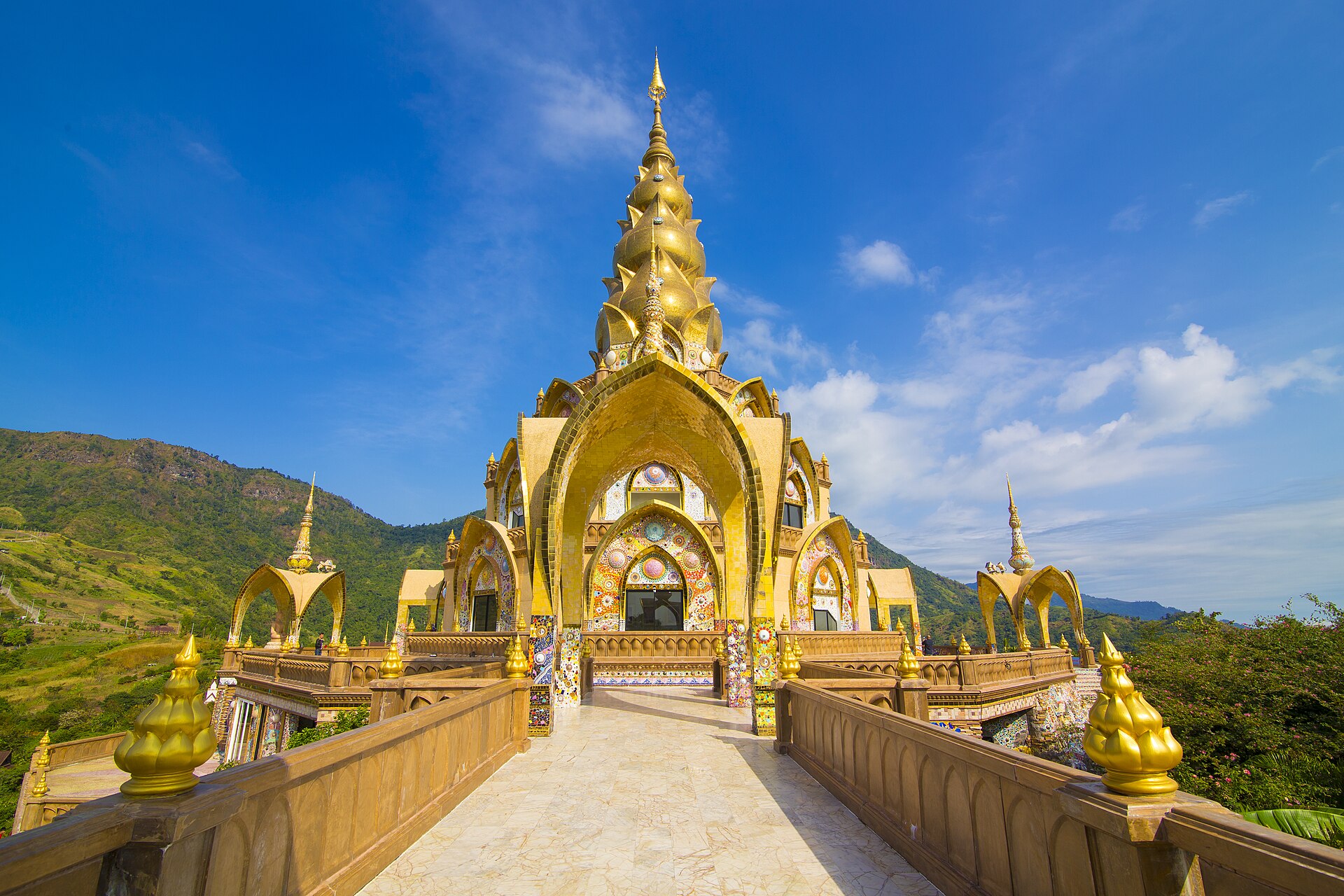
The temple's main chedi was built to honour King Rama IX's sixty years on the throne and holds Buddha relics presented by the late Supreme Patriarch. Building work has continued ever since, and the temple keeps adding new structures, including, most recently, a replica of Myanmar's Shwedagon Pagoda.
The temple's most famous sight: five seated white Buddha images arranged in a line down the hillside, each one smaller than the one behind it. Seen from the side, they seem to rise straight out of the mountains. Come early, when the light is soft and the valley below is often filled with mist.
The main chedi is a dazzling mix of gold, ceramics and coloured glass. Walk around the base slowly: every surface carries patterns made from broken bowls, plates and tiles. The interior has been used for Dhamma teaching and meditation, with picture panels that work like visual riddles about Buddhist ideas.
The details are what make Pha Son Kaew special. Look closely at the stairways, railings and walls and you will find pieces of porcelain, Benjarong-style ceramics and coloured stones arranged into flowers and swirling patterns. It is a place that rewards slowing down.
From the terraces, the hills of Khao Kho roll away in every direction. Between November and February, the valley is often covered in morning mist, and the temple seems to float above it. Even on a hazy afternoon, the setting is spectacular.
Opening hours: Daily, around 8:00am to 5:00pm (some visitors report earlier opening at weekends, so check locally)
Entrance fee: Free (donations welcome); a small parking fee may apply
Location: Ban Thang Daeng, Khaem Son, Khao Kho district, Phetchabun
Time needed: 1 to 1.5 hours
Dress code: Cover shoulders and knees; staff may turn away clothing they consider disrespectful
There is no public transport to the temple, so you will need a car, a hired driver or a tour. From Bangkok, the drive takes around five hours: follow Route 21 north through Saraburi and Lopburi towards Phetchabun, turn onto Route 12 towards Lom Sak and Phitsanulok, and look for the temple sign near kilometre marker 103, at the turn for Ban Thang Daeng. Phetchabun town is around an hour away.
The road through Khao Kho is winding and climbs steadily, so drive carefully, especially in rain or fog.
Arrive early. Mornings bring the best chance of mist in the valley and far fewer people.
Visit on a weekday. Weekends and public holidays, especially around New Year, are very busy.
Bring a jacket in the cool season. At 830 metres, mornings from November to February can be surprisingly cold.
Respect the meditation areas. This is a working monastery. Keep your voice down and follow any signs asking for silence.
Make a day of Khao Kho. Combine the temple with viewpoints such as Khao Takhian Ngo, the wind farm and local cafés with mountain views.
Love colourful, artistic temples? Read our guides to the White Temple and the Blue Temple in Chiang Rai.
Photo credits: Tanawat buatsunthia via Wikimedia Commons (CC BY-SA 4.0); Athichitra via Wikimedia Commons (CC BY-SA 4.0); SupawatR via Wikimedia Commons (CC BY-SA 4.0); Stevehhaigh via Wikimedia Commons (CC BY-SA 3.0); Sorrasan via Wikimedia Commons (CC BY-SA 3.0).
Five seated white Buddha images stepping down the hillside above the Khao Kho mountains.
The main chedi, covered in gold, ceramics and coloured glass, built to honour King Rama IX.
Millions of pieces of porcelain and coloured stone pressed into walls, stairways and railings.
Morning mist fills the valley below from November to February.
Ban Thang Daeng, Khaem Son, Khao Kho District, Phetchabun 67280, Thailand
Directions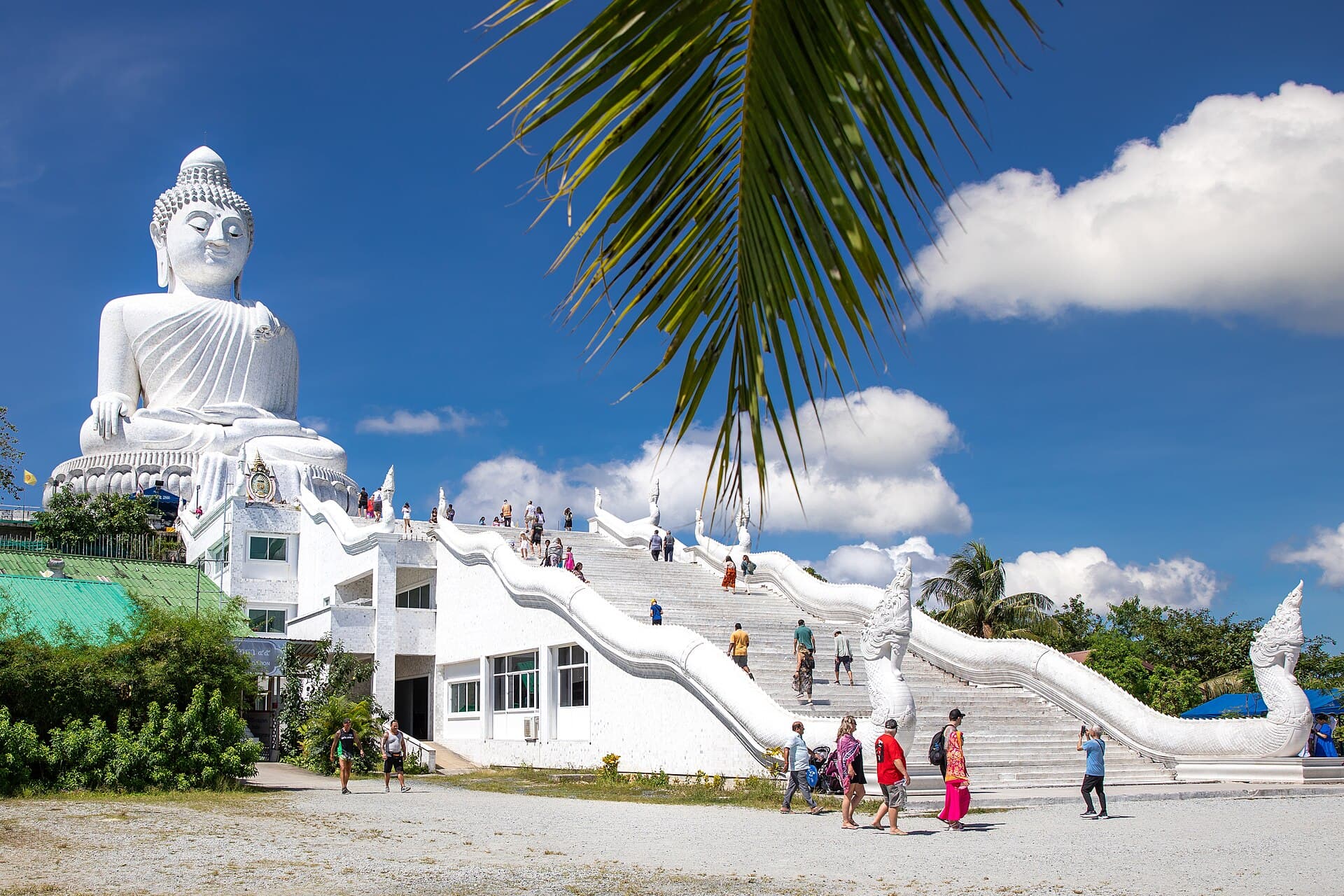
Nakkerd Hill, Soi Yot Sane 1, Mueang Phuket District, Phuket, Thailand
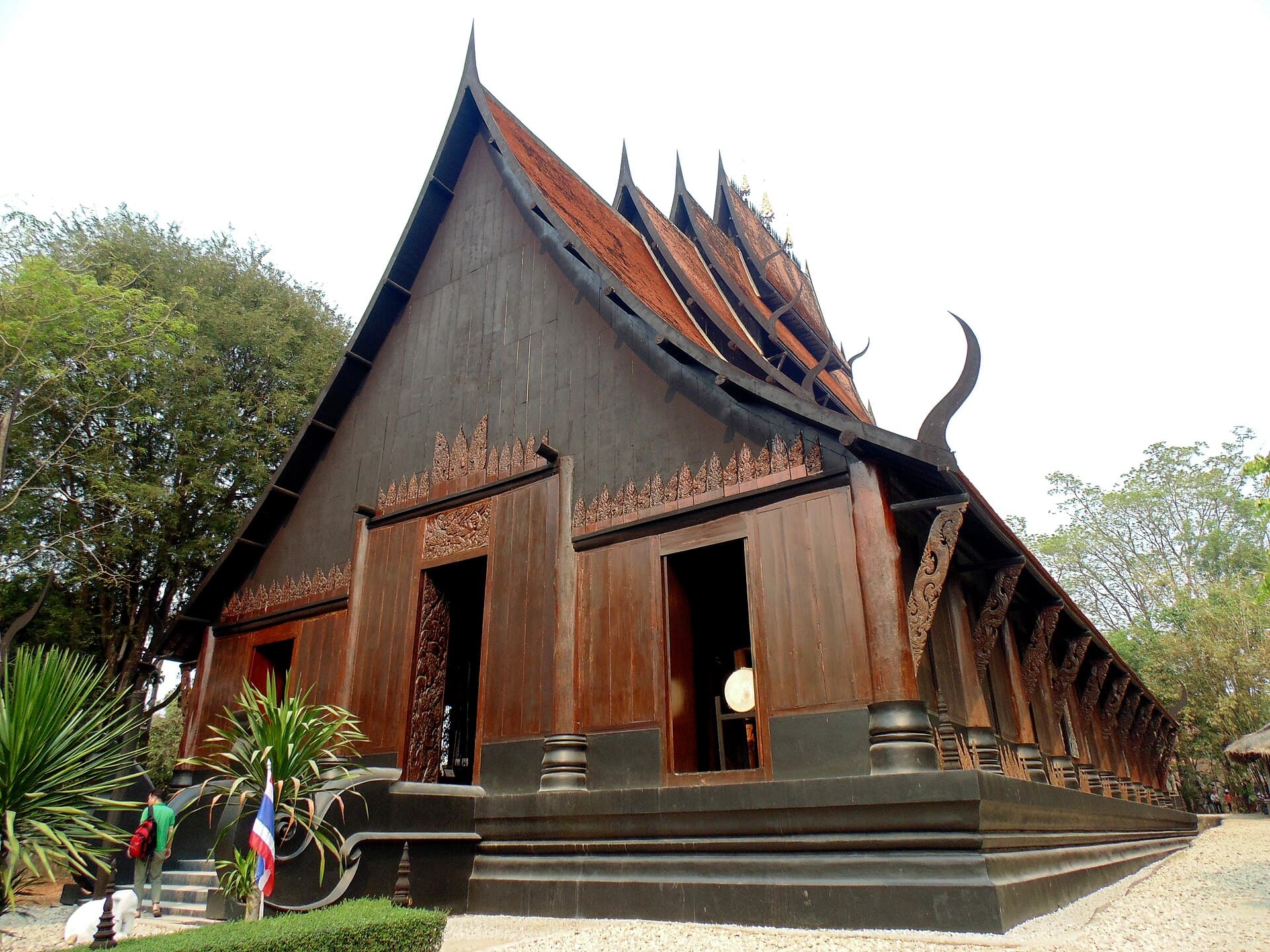
414 Moo 13, Tambon Nang Lae, Mueang Chiang Rai District, Chiang Rai 57100, Thailand
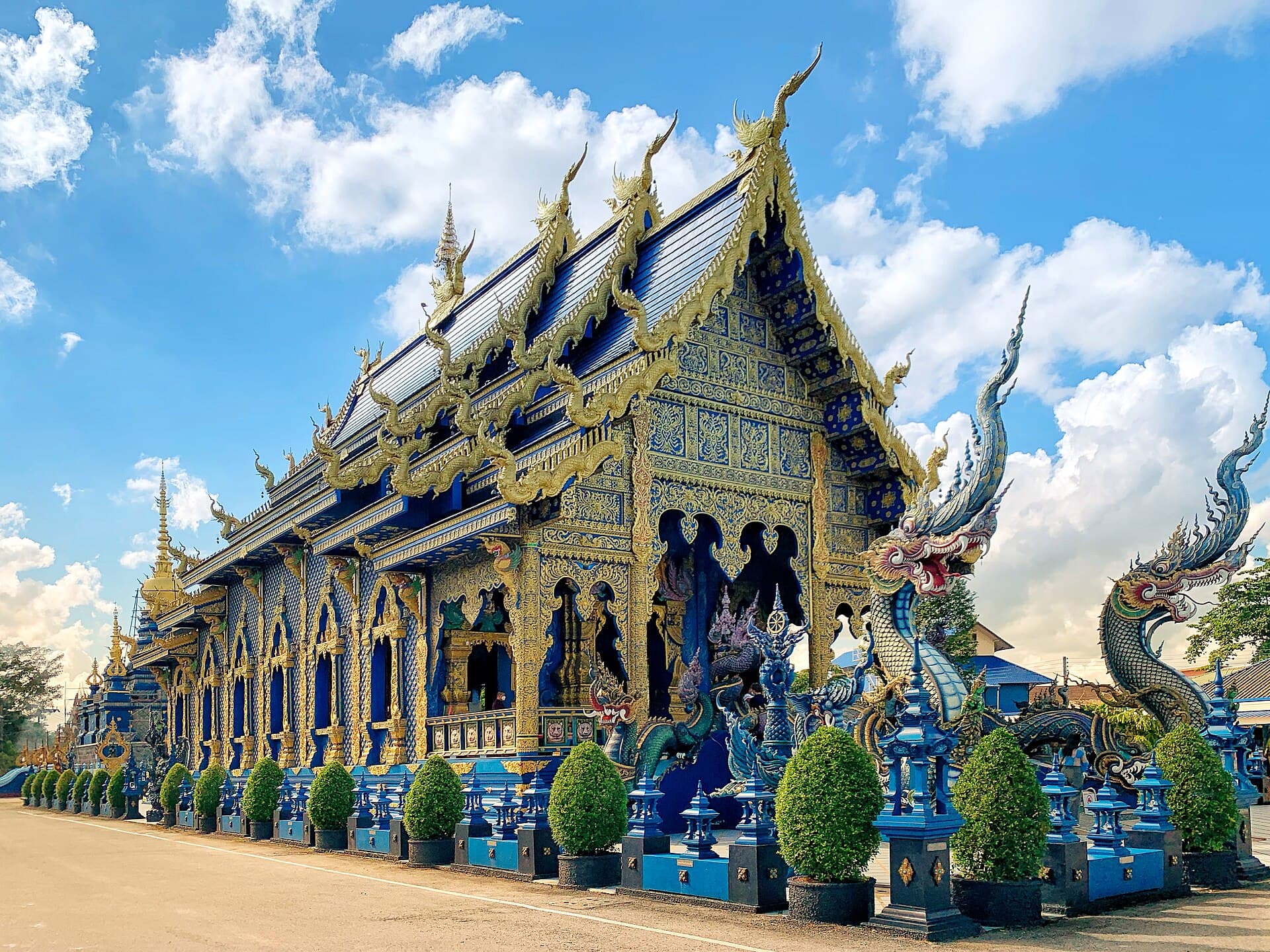
306 Moo 2, Maekok Road, Tambon Rim Kok, Mueang Chiang Rai District, Chiang Rai 57100, Thailand