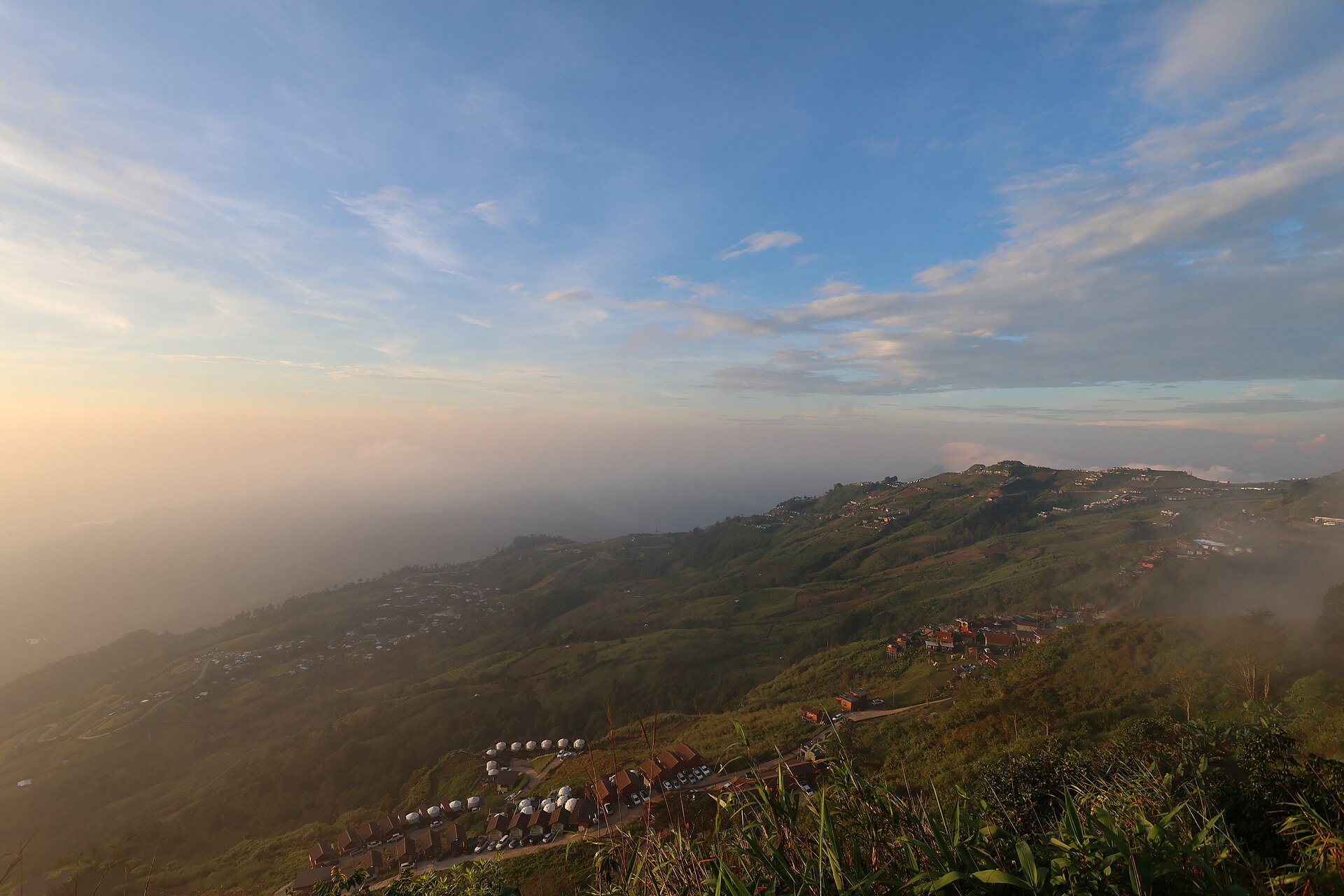
Most mountain viewpoints in Thailand make you work for the view. Phu Thap Boek mostly lets you drive to it. At around 1,768 metres above sea level, it is the highest peak in Phetchabun, and on a cool-season morning you can stand at the top with a coffee in your hand and watch a sea of mist fill the valleys below, broken only by the ridges of the Phetchabun mountains.
It is also a working farming community, where Hmong families grow cabbages on slopes so steep they look painted onto the hillside. That mix of big views, cold air and patchwork fields is why Phu Thap Boek has become one of the most popular winter escapes in northern Thailand.
Phu Thap Boek sits in Wang Ban subdistrict, Lom Kao district, in the far north of Phetchabun province, close to the border with Loei. The summit area is a broad ridge rather than a single pointed peak, covered with farms, viewpoints, small resorts, campsites and roadside cafés.
There is no entrance fee to visit the area itself. You pay only for parking, camping or accommodation run by private operators, and some viewpoints on private land may ask for a small fee.
The mountain is home to a Hmong community whose families settled on the mountain with the support of the Phetchabun Hilltribe Development and Relief Center, set up in 1982. Over the following decades, farmers turned the slopes into one of Thailand's best-known cabbage-growing areas, and the terraced green fields became the image most people now associate with Phu Thap Boek.
Tourism arrived quickly once photos of the sea of mist began circulating, and resorts and homestays spread across the ridge. That growth has been controversial. Much of the land sits in protected forest and settlement areas, and authorities ordered a number of resorts demolished in 2016. Thai media reported in 2024 that building had continued regardless, with more than 500 resorts counted on the mountain by 2023. For visitors, the practical point is simple: the area can feel busy and built-up in places, so it pays to choose where you stay with some care.
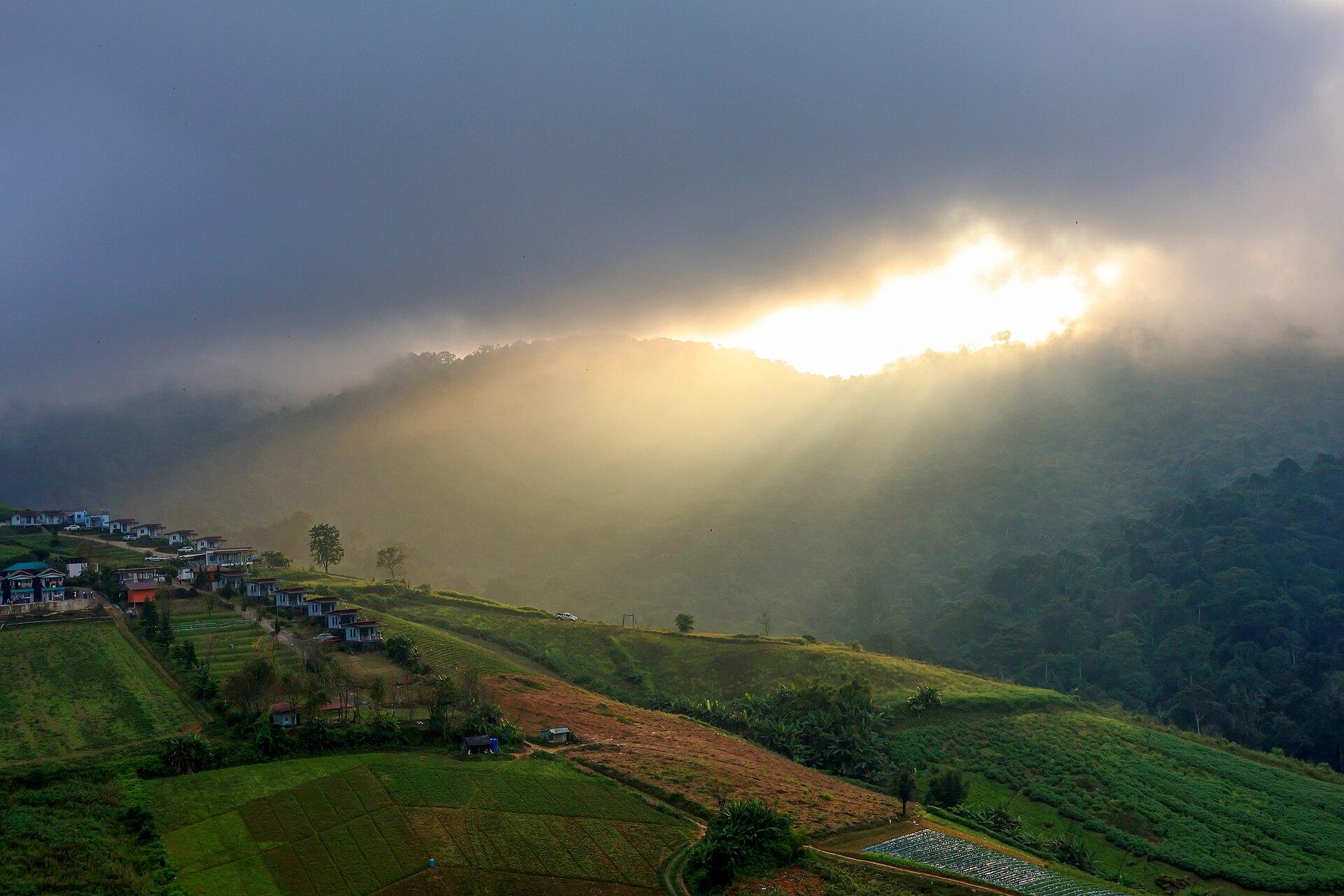
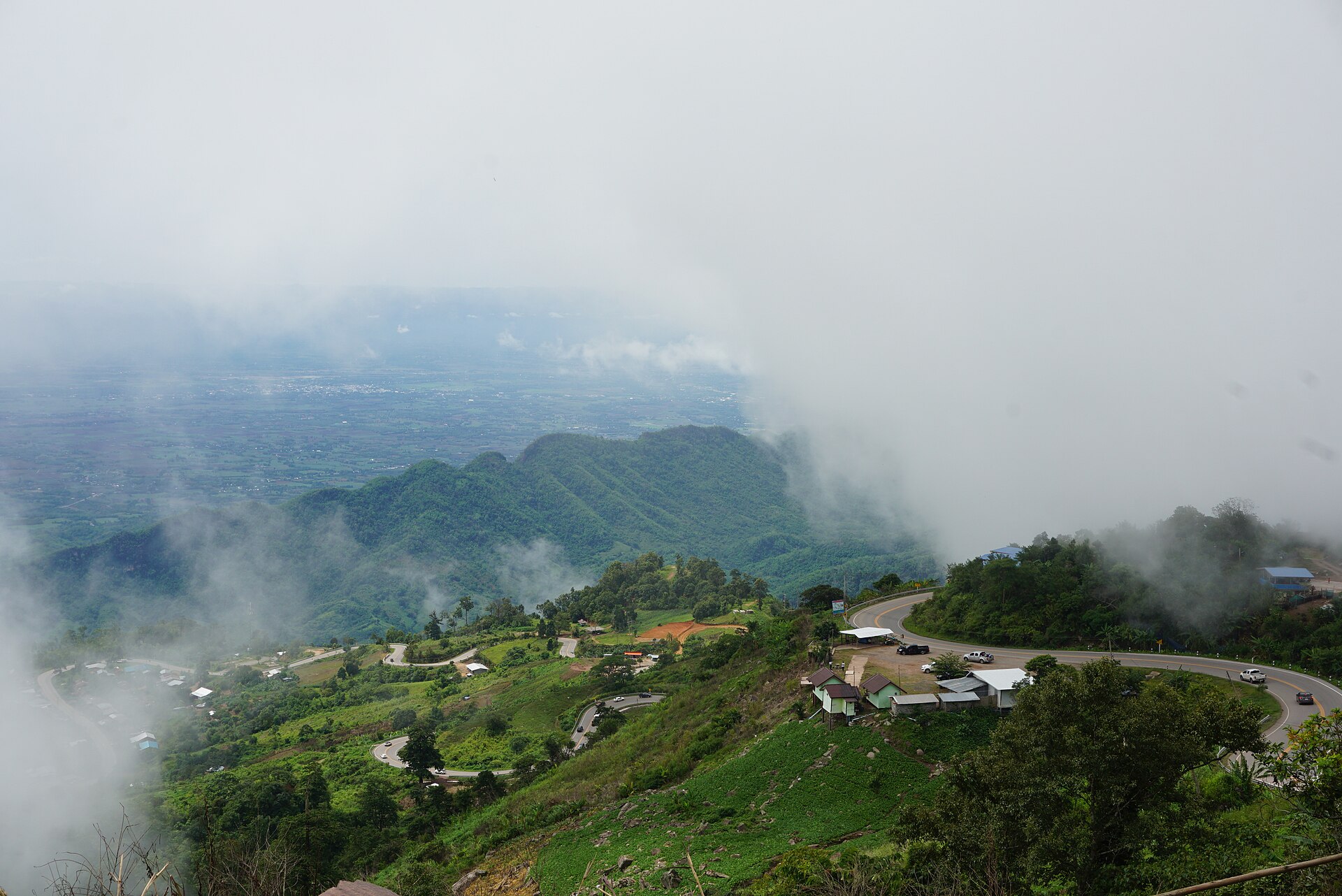
This is what draws the crowds. On clear, cold mornings, low cloud settles in the valleys and the hilltops rise out of it like islands. The best chances are from November to February, especially after a cool night, though mist can also appear late in the rainy season after heavy rain. Be at a viewpoint before sunrise, around 5:30am to 6:00am, and expect it to start breaking up by mid-morning.
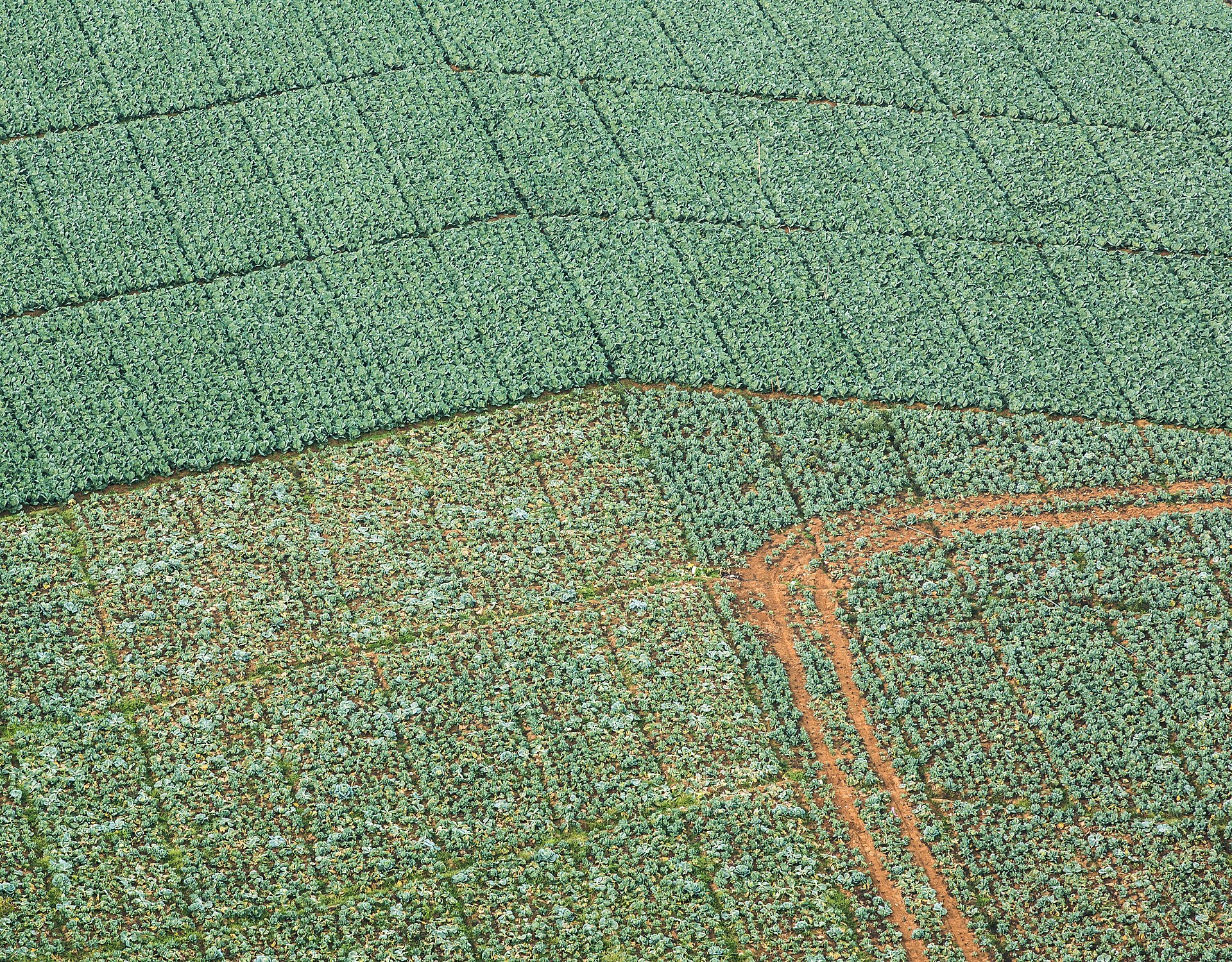
Rows of cabbages wrap around the hills in curving terraces, and they are at their greenest in the rainy season, from around May to October. Stop at the roadside pull-offs rather than walking into the fields, as these are farmers' crops and livelihoods.
The highest point of Phu Thap Boek is marked with a sign and offers wide views across the Phetchabun range. It is the classic sunrise spot, so it gets crowded on cool-season weekends. Nearby viewpoints such as Pha Hua Sing are popular for sunset.
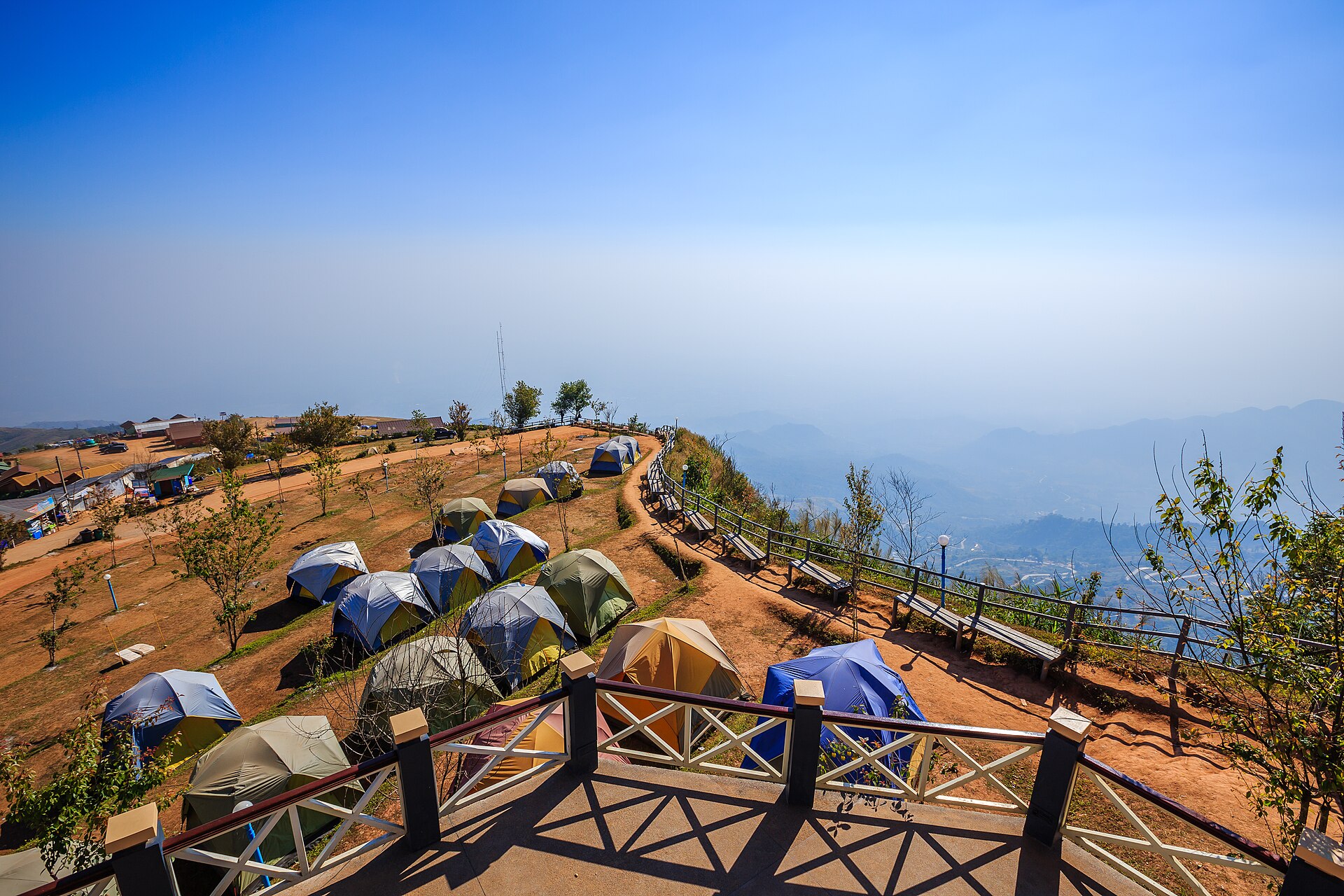
Camping is part of the Phu Thap Boek experience. Several campsites along the ridge rent tents and bedding and sit right on the edge of the slope, so you can unzip your tent to the view at dawn. Nights in December and January can be cold enough for a sleeping bag and a proper jacket.
Location: Wang Ban subdistrict, Lom Kao district, Phetchabun, near the Loei border
Elevation: Around 1,768 metres above sea level (some sources give slightly different figures)
Opening hours: Open access; viewpoints and cafés on private land set their own hours
Entrance fee: Free; parking, camping and some viewpoints may charge a small fee
Best time to visit: November to February for mist and cool weather; May to October for the greenest fields
Temperature: Cool-season mornings can drop into single digits Celsius
Phu Thap Boek is about 430 to 450 kilometres from Bangkok, a drive of roughly six to seven hours. Head north on Route 21 towards Phetchabun and Lom Sak, continue on Route 203 towards Lom Kao, then follow the signs west up the mountain road for the final stretch of around 12 kilometres. From Phetchabun town, allow around one and a half to two hours.
The final climb is steep, narrow and full of hairpin bends. Use a low gear on the way down, take it slowly in rain or fog, and make sure your car is in good condition. If you are not confident on mountain roads, or are arriving by bus, take a bus to Lom Sak or Lom Kao and hire a local pickup truck (songthaew) for the climb. Riders coming by motorbike should fill up in Lom Sak or Lom Kao first.
Go on a weekday. Cool-season weekends and long holidays bring heavy traffic on the mountain road and crowds at sunrise.
Book ahead in winter. Tents and rooms with a view fill up quickly from December to February.
Pack warm layers. Even if it is hot in the lowlands, bring a jacket, long trousers and something for your head and hands.
Check the weather before you drive up. Mist is never guaranteed, and fog can make the road difficult after dark.
Respect the farms. Stay on roads and paths, don't pick vegetables and ask before photographing people.
Combine it with Khao Kho. Spend a night at Phu Thap Boek, then head south to the mountain temples and viewpoints of Khao Kho.
Making a road trip through Phetchabun? Don't miss Wat Phra That Pha Son Kaew in Khao Kho, the famous mosaic temple with five white Buddhas. For more of northern Thailand, see our guides to the White Temple and the Blue Temple in Chiang Rai.
Photo credits: Kriengsak Jirasirirojanakorn via Wikimedia Commons (CC BY-SA 4.0); Aphinya Thabunrueang via Wikimedia Commons (CC BY-SA 4.0); Piith.hant via Wikimedia Commons (CC BY-SA 4.0); Ariyachat Trikrutpan via Wikimedia Commons (CC BY-SA 4.0).
On clear, cold mornings from November to February, low cloud fills the valleys and the hilltops rise out of it like islands. Be at a viewpoint before sunrise for the best chance.
Curving rows of cabbages wrap around the slopes, farmed by the local Hmong community. They are greenest in the rainy season, from around May to October.
Campsites along the ridge rent tents and bedding right on the edge of the slope, so you can wake up to the view. Bring warm layers for cold winter nights.
The highest point of Phu Thap Boek, at around 1,768 metres, looks out across the Phetchabun range and is the classic spot for sunrise.
Phu Thap Boek, Wang Ban, Lom Kao District, Phetchabun 67120, Thailand
Directions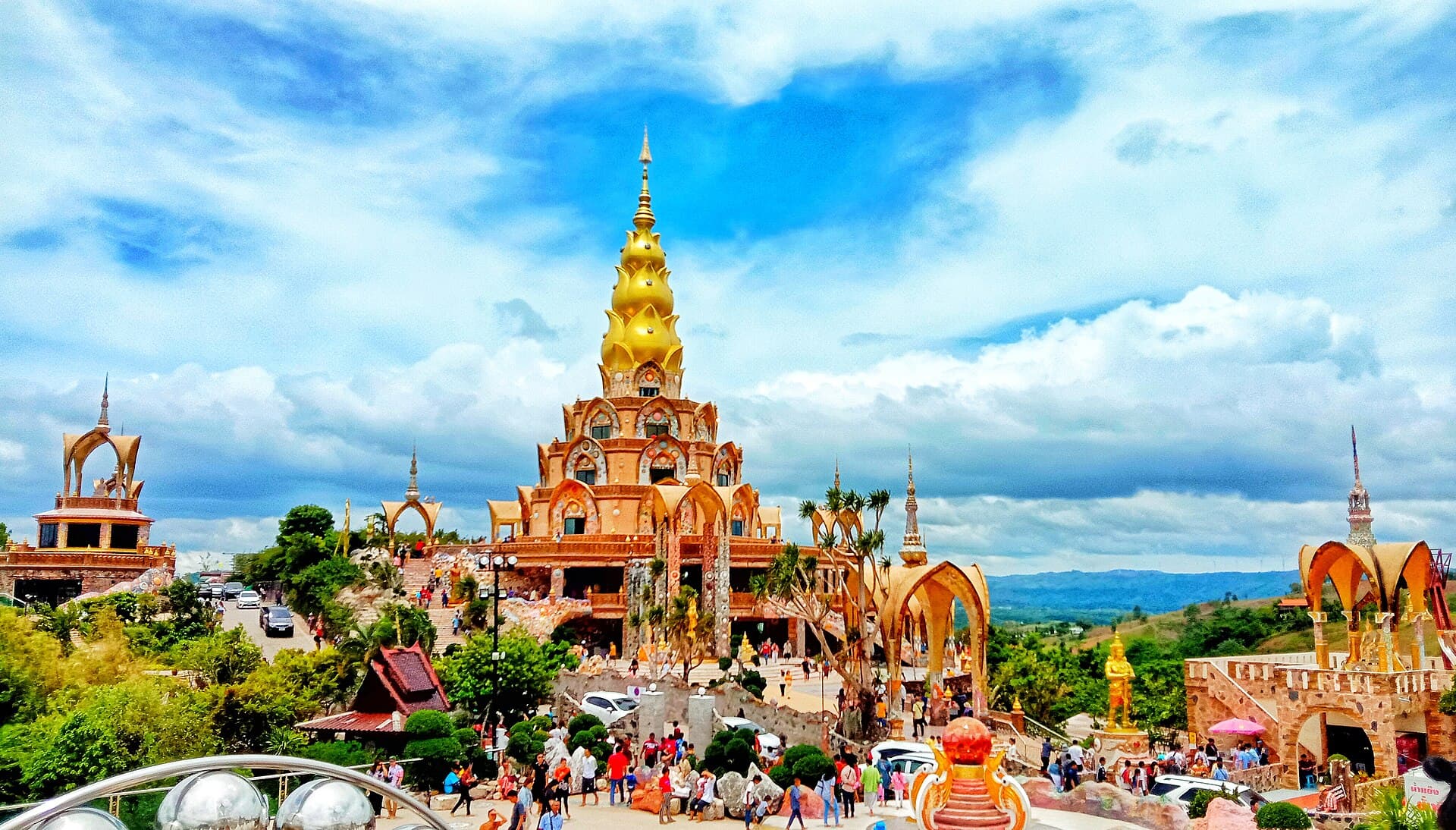
Ban Thang Daeng, Khaem Son, Khao Kho District, Phetchabun 67280, Thailand
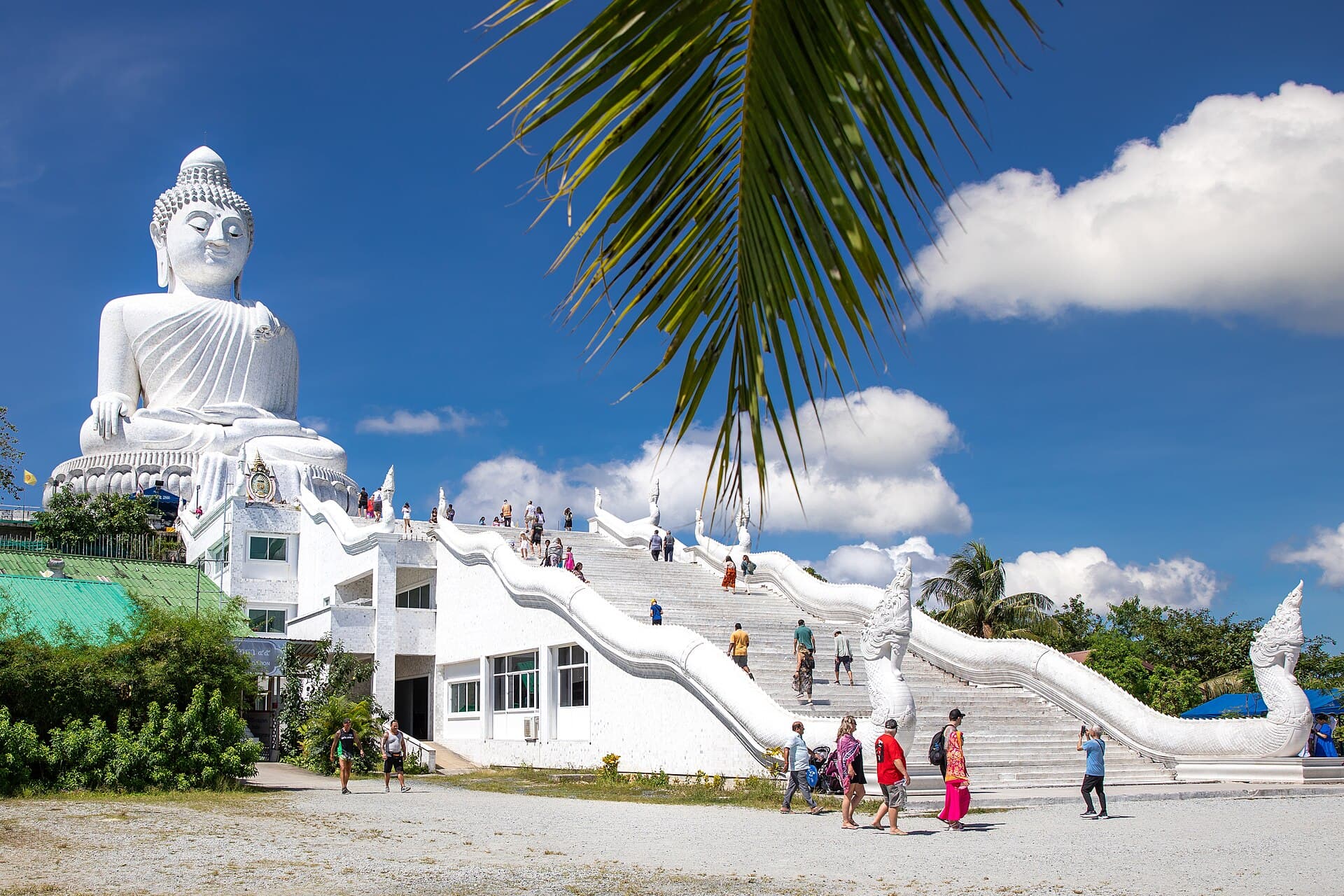
Nakkerd Hill, Soi Yot Sane 1, Mueang Phuket District, Phuket, Thailand
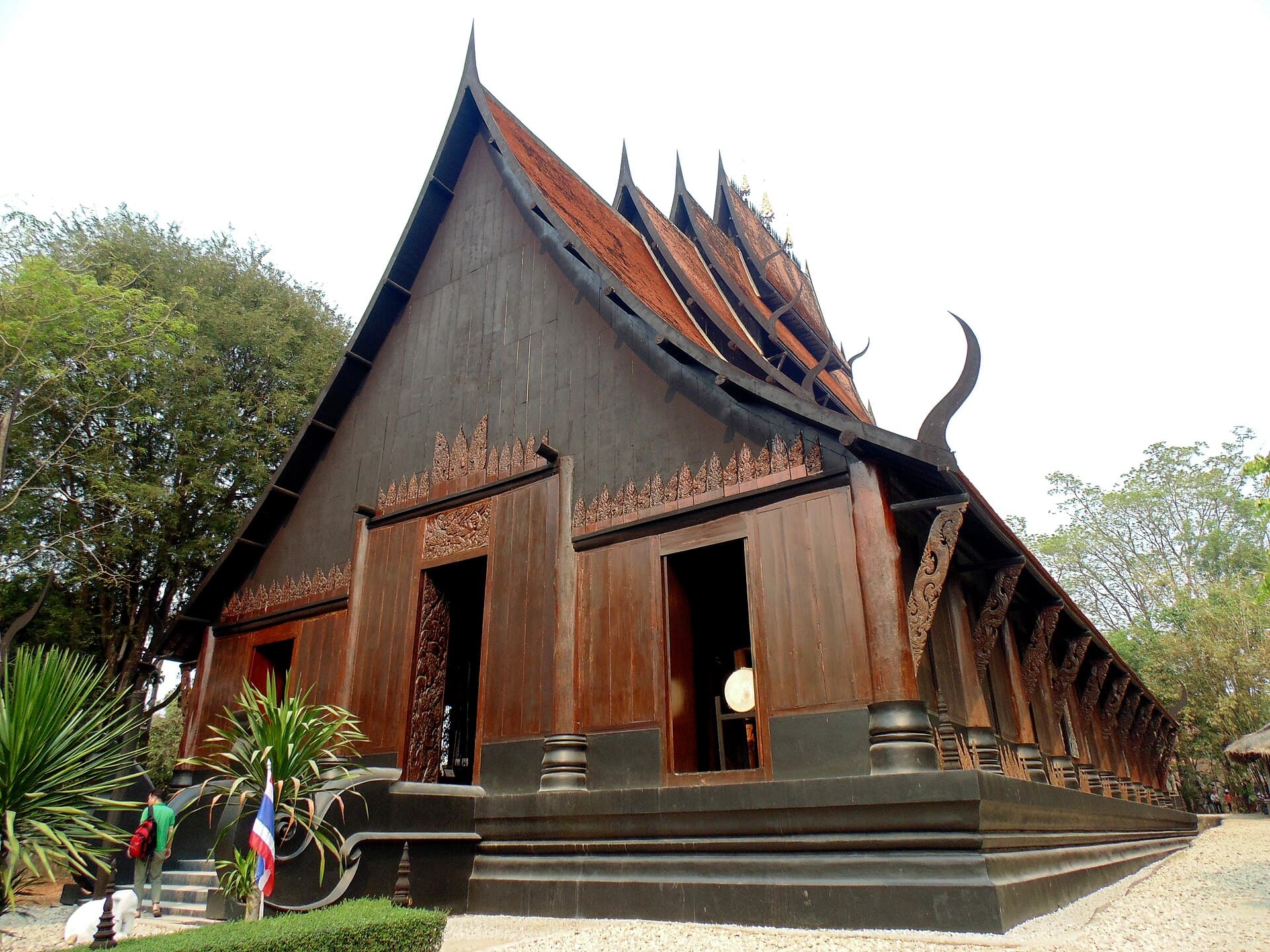
414 Moo 13, Tambon Nang Lae, Mueang Chiang Rai District, Chiang Rai 57100, Thailand